IVF Success Rates: Success Chances & Key Factors Explained
With advances in reproductive medicine, in vitro fertilization (IVF) has become an important fertility treatment option for couples experiencing infertility. However, IVF success rates can vary considerably from one person to another.
One of the most important factors associated with IVF outcomes is female age, particularly because egg number and egg quality generally decline with age. However, age is only one part of the picture. Ovarian reserve, sperm quality, embryo development, uterine health, infertility diagnosis, previous treatment history, and the type of IVF treatment can also influence outcomes.
Therefore, if you are researching the IVF success rate by age, it is important to understand what the available statistics actually mean and why your individual chances may be different.
At Imprimis IVF & Fertility Centre, Srinagar, our fertility specialists evaluate each couple individually and develop a treatment plan based on their medical history and fertility assessment.
IVF Success Rate by Age: Why Does Age Matter?
Age is an important factor in IVF because female fertility changes over time. In general, younger women tend to have a higher probability of producing eggs and embryos with reproductive potential.
As age increases, ovarian reserve and egg quality generally decline. In addition, the proportion of embryos with chromosomal abnormalities tends to increase with maternal age.
However, this does not mean that IVF cannot work after 35 or 40. Instead, the expected probability of success may change, and treatment planning may become more individualized.
For example, current ART reporting systems present success rates by age group because age is an important factor in treatment outcomes. However, these population-level figures should not be interpreted as an individual’s personal probability of having a baby.
IVF Success Rates by Age Group
When discussing IVF success rates by age, fertility clinics and research studies may use different measures and age categories.
Common age groups include:
- Under 35
- 35–37
- 38–40
- 41–42
- Over 42
The exact success rate can also differ depending on whether the calculation is based on:
- IVF cycle started
- Egg retrieval
- Embryo transfer
- Clinical pregnancy
- Live birth
- Cumulative treatment involving multiple embryo transfers
Therefore, two IVF success rates may look different even when they come from reliable sources because they are measuring different outcomes.
IVF Success Rate Under 35
Women under 35 generally have higher IVF success rates with their own eggs compared with older age groups. However, the exact probability depends on factors such as ovarian reserve, embryo quality, sperm quality, infertility diagnosis, and treatment protocol.
For example, CDC national ART data for 2022 reported a higher live-birth rate per intended retrieval among patients under 35 than among older age groups. However, these figures represent a large population and should not be used as an individual prediction.
If you are under 35 and considering IVF treatment in Srinagar, your fertility specialist can assess your ovarian reserve and other factors to provide a more individualized understanding of your treatment prospects.
IVF Success Rate Between 35 and 37
Between 35 and 37, IVF success rates may begin to decline compared with younger age groups.
This change is primarily associated with age-related changes in egg quality. Nevertheless, many women in this age group successfully conceive through IVF.
Your fertility assessment may include ovarian reserve testing, ultrasound evaluation, hormone testing, and assessment of other infertility factors.
IVF Success Rate Between 38 and 40
Between 38 and 40, the effect of age on IVF outcomes becomes more significant.
Egg quantity and quality generally decline with age, and the likelihood of chromosomal abnormalities in embryos increases. Consequently, fewer embryos may have the potential to result in a successful pregnancy.
However, IVF outcomes can still vary considerably between individuals.
IVF Success Rate After 40
After 40, IVF success rates with a woman’s own eggs generally decline more substantially.
The decline is largely associated with changes in egg quality and an increasing proportion of embryos affected by chromosomal abnormalities.
For women over 40, a fertility specialist may discuss options such as IVF using their own eggs, donor egg IVF, embryo testing in appropriate circumstances, or other treatment approaches depending on their individual fertility assessment.
Current ART data also demonstrate substantial differences in outcomes across age groups, reinforcing the need to interpret age-specific statistics carefully rather than using them as a guarantee for an individual patient.
IVF Success Rate by Number and Quality of Embryos
The number and quality of embryos can influence IVF outcomes. However, transferring more embryos does not automatically mean a higher chance of having a healthy baby.
Instead, fertility specialists consider embryo quality, patient age, previous treatment history, embryo testing where appropriate, and the risks associated with multiple pregnancy.
Single Embryo Transfer vs Multiple Embryo Transfer
A single embryo transfer (SET) transfers one embryo into the uterus.
Multiple embryo transfer involves transferring more than one embryo. Although this may increase the chance of implantation in some circumstances, it can also increase the risk of multiple pregnancy.
Multiple pregnancies are associated with higher risks for both the mother and babies. Therefore, many fertility treatment strategies emphasize transferring an appropriate number of embryos rather than simply transferring more embryos.
CDC national ART data for 2022 showed that 85.9% of embryo transfers were single embryo transfers in the United States.
Your fertility specialist can determine the most appropriate embryo-transfer strategy based on your individual circumstances.
Frozen Embryo Transfer Success Rate
Frozen Embryo Transfer (FET) involves transferring a previously frozen embryo into the uterus during a suitable cycle.
FET is now an established part of IVF treatment. However, its success rate cannot be captured by a single universal percentage.
The outcome can depend on:
- Female age
- Age when the eggs were coll
- ected
- Embryo quality
- Embryo stage
- Endometrial preparation
- Uterine health
- Whether the embryo was genetically tested
- Previous treatment history
Therefore, a frozen embryo transfer success rate should always be interpreted in the context of the patient and embryo characteristics.
Why Does IVF Success Rate Decrease With Age?
There are several biological reasons why IVF outcomes may decline with increasing female age.
1. Declining Ovarian Reserve
Ovarian reserve refers broadly to the remaining supply of eggs in the ovaries.
As a woman ages, the number of available eggs generally decreases. However, ovarian reserve tests such as AMH and AFC provide information about egg quantity or expected ovarian response; they do not independently determine whether an individual will achieve a pregnancy through IVF.
Therefore, AMH should be interpreted together with age, ultrasound findings, medical history, and other fertility factors.
2. Changes in Egg Quality
Age is associated with changes in egg quality.
As egg quality declines, the likelihood of chromosomal abnormalities in embryos increases. Consequently, fewer embryos may have the potential to implant and develop into an ongoing pregnancy.
This is one of the major reasons why IVF success rates by age are an important consideration when planning fertility treatment.
3. Embryo Chromosomal Abnormalities
An embryo can have an abnormal number of chromosomes, a condition known as aneuploidy.
The likelihood of aneuploid embryos generally increases with maternal age. An embryo with significant chromosomal abnormalities may fail to implant or may result in miscarriage.
However, embryo appearance under a microscope does not always reveal chromosomal status.
Other Factors That Affect IVF Success Rate
Although age is important, it is not the only factor that affects IVF outcomes.
Ovarian Response and Ovarian Reserve
During IVF, fertility medicines stimulate the ovaries to develop multiple follicles.
Women with diminished ovarian reserve may produce fewer eggs during stimulation. However, ovarian response varies among individuals, and a lower egg yield does not necessarily mean IVF cannot succeed.
Sperm Quality and Male Fertility
Sperm quality can also influence fertilisation and embryo development.
Important sperm parameters include:
- Sperm concentration
- Sperm motility
- Sperm morphology
- Sperm DNA integrity in selected cases
Male infertility can therefore play an important role in IVF planning.
Embryo Quality
Embryo quality is another important factor.
Embryologists assess embryos using established laboratory criteria. However, embryo morphology alone cannot guarantee implantation or live birth.
Uterine and Endometrial Factors
The uterus and endometrium also play an important role in embryo implantation.
Conditions affecting the uterine cavity, endometrium, or reproductive anatomy may need evaluation before embryo transfer.
Previous IVF History
Previous IVF cycles can provide useful information for future treatment planning.
For example, previous ovarian response, fertilisation results, embryo development, implantation outcomes, and pregnancy history may help your fertility specialist modify a subsequent treatment plan.
Lifestyle and General Health
Lifestyle and general health can also influence reproductive health.
Maintaining a healthy lifestyle, avoiding smoking, limiting alcohol, maintaining an appropriate weight, and following your doctor’s recommendations may support overall fertility care.
However, lifestyle changes cannot guarantee IVF success.
How Can You Improve Your Chances of IVF Success?
No fertility centre can guarantee a 100% IVF success rate.
However, several steps can help you prepare for treatment and address factors that may affect your outcome.
Choose an Experienced IVF Centre
IVF is a complex form of assisted reproductive technology (ART) involving fertility specialists, embryologists, laboratory procedures, medications, monitoring, and embryo transfer.
Therefore, choose a fertility centre where the medical team can clearly explain your diagnosis, treatment options, expected outcomes, and potential risks.
Follow Your IVF Medication Schedule
IVF medicines are prescribed according to an individualized treatment protocol.
Therefore, take your medicines exactly as prescribed and follow your fertility specialist’s instructions regarding timing and dosage.
If you miss a dose or are unsure about medication instructions, contact your fertility team rather than changing the medication yourself.
Maintain a Healthy Lifestyle
A balanced diet, regular physical activity appropriate for your health, adequate sleep, and avoiding smoking can support overall health during fertility treatment.
In addition, follow any specific dietary or lifestyle recommendations provided by your fertility specialist.
Follow Post-Transfer Instructions
After embryo transfer, follow your fertility team’s instructions regarding medicines, physical activity, and follow-up.
Strict bed rest is generally not required simply because an embryo has been transferred. Instead, follow the specific recommendations provided by your treating doctor.
Manage Expectations and Seek Support
IVF can be emotionally demanding.
Therefore, couples may benefit from appropriate emotional support, counseling, and open communication with their fertility team.
Most importantly, remember that IVF outcomes cannot be guaranteed, even when embryos and treatment parameters appear favorable.
Donor Egg IVF Success Rate
For some women, particularly those with significantly reduced ovarian reserve or age-related decline in egg quality, a fertility specialist may discuss donor egg IVF.
Donor egg treatment uses donor eggs to create embryos for transfer.
Importantly, donor egg IVF outcomes are influenced by factors related to the donor eggs as well as the recipient’s health and treatment circumstances.
Current ART reporting separates donor-egg cycles from cycles using a patient’s own eggs because the outcomes are not directly comparable.
Therefore, women considering donor egg IVF should discuss their individual treatment options and expected outcomes with a fertility specialist.
IVF Success Rate With PGT-A or Preimplantation Genetic Testing
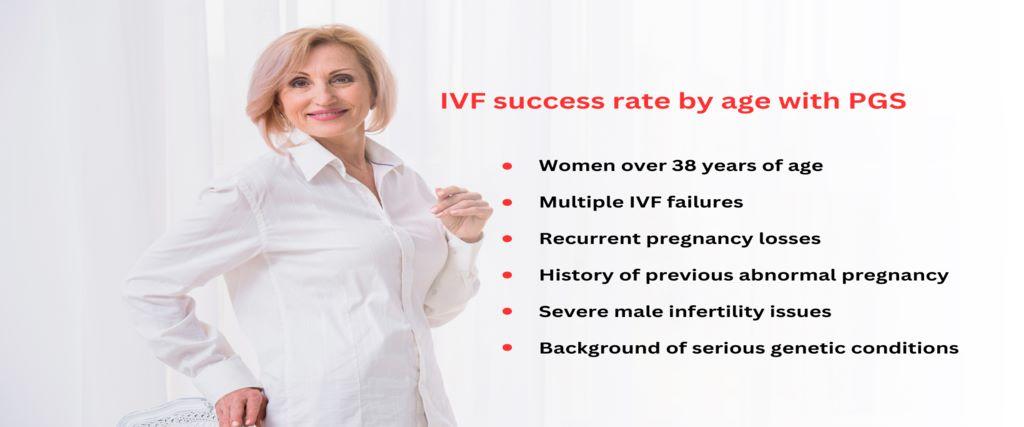
Preimplantation Genetic Testing for Aneuploidy (PGT-A) involves testing cells from an embryo to identify certain chromosome-number abnormalities before embryo transfer.
It is important to understand that PGT-A does not guarantee IVF success and is not appropriate for every patient.
Evidence on whether PGT-A improves cumulative live-birth outcomes for all IVF patients is mixed. The American Society for Reproductive Medicine notes that available evidence does not support assuming a universal benefit for every patient.
A fertility specialist may consider factors such as:
- Female age
- Embryo availability
- Previous IVF history
- Recurrent pregnancy loss
- Genetic considerations
- Number and quality of blastocysts
- Individual treatment goals
Therefore, PGT-A should be considered on an individual basis rather than as a routine way to guarantee higher IVF success.
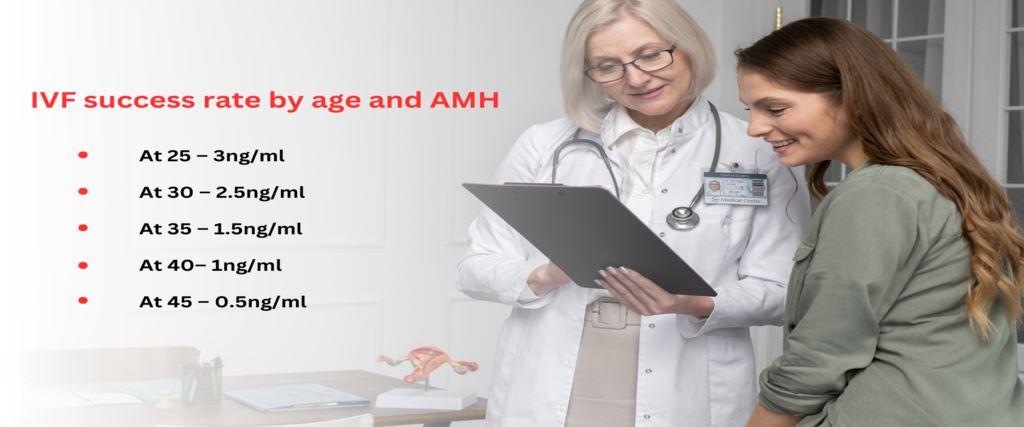
IVF Success Rate by Age and AMH
Anti-Müllerian Hormone (AMH) is commonly used as one marker of ovarian reserve.
AMH can help fertility specialists estimate how the ovaries may respond to stimulation. However, AMH should not be treated as a direct predictor of whether an individual woman will become pregnant through IVF.
In other words, a low AMH does not automatically mean IVF will fail, while a normal AMH does not guarantee pregnancy.
Age remains an important factor because ovarian reserve and egg quality are related but different concepts.
Therefore, your fertility specialist may consider:
- Age
- AMH
- Antral follicle count
- Previous ovarian response
- Menstrual history
- Other hormone tests
- Medical history
- Previous IVF outcomes
Together, these factors provide a more complete picture than AMH alone.
IVF Success Rate by Age: Understanding the Numbers
When researching IVF success rates by age, always check what the percentage actually represents.
For example, a study or clinic may report success:
- Per IVF cycle
- Per egg retrieval
- Per embryo transfer
- Per clinical pregnancy
- Per live birth
- Per patient
- As a cumulative chance after multiple transfers
These measurements are not interchangeable.
For instance, CDC ART reporting distinguishes between intended retrievals, actual retrievals, transfers, clinical pregnancy, and live-birth outcomes.
Therefore, rather than asking only, “What is the IVF success rate at my age?”, ask your fertility specialist:
- Is the percentage based on pregnancy or live birth?
- Is it calculated per cycle or per embryo transfer?
- Does it include patients using their own eggs?
- What is the age group?
- Does it include fresh and frozen transfers?
- Does it include patients with previous IVF attempts?
- How do my individual medical factors affect my expected outcome?
This gives you a much clearer understanding of what the numbers mean.
IVF Success Rate in Srinagar
If you are searching for the IVF success rate in Srinagar, it is important to compare like-for-like information.
Clinic success rates can vary because clinics may treat different patient populations and use different treatment protocols. Therefore, a single percentage should not be used to predict the outcome of an individual couple.
At Imprimis IVF & Fertility Centre, Srinagar, your fertility specialist can review your age, ovarian reserve, sperm parameters, infertility diagnosis, previous treatment history, and other relevant factors before discussing your treatment plan.
Frequently Asked Questions About IVF Success Rate by Age
What is the IVF success rate by age?
IVF success rates generally decline as female age increases, particularly when using the woman’s own eggs. However, the exact rate varies according to the patient population, treatment method, and definition of success.
Is IVF more successful before age 35?
In general, younger age is associated with higher IVF success rates when using a woman’s own eggs. However, age alone cannot predict an individual’s treatment outcome.
What is the IVF success rate after 40?
IVF success rates with a woman’s own eggs generally decline after 40. However, individual outcomes vary considerably, so a fertility assessment is necessary to understand personal treatment prospects.
Does AMH determine IVF success?
No. AMH is primarily a marker of ovarian reserve and can help predict ovarian response to stimulation. It does not independently determine whether IVF will result in pregnancy or live birth.
Does transferring two embryos increase IVF success?
Transferring more than one embryo does not automatically mean a better overall outcome. It can increase the risk of multiple pregnancy. Therefore, the number of embryos to be transferred should be determined based on individual clinical circumstances.
Can IVF guarantee pregnancy?
No. IVF can help many couples achieve pregnancy, but no fertility treatment can guarantee pregnancy or live birth.
Does PGT-A guarantee a successful IVF pregnancy?
No. PGT-A can provide information about chromosome number in tested embryos, but it does not guarantee implantation, pregnancy, or live birth. Its potential benefits should be discussed with a fertility specialist.
Can women over 40 have successful IVF?
Yes. Women over 40 can achieve pregnancy through IVF. However, success rates with their own eggs generally decline with age. Depending on the individual situation, a fertility specialist may discuss additional treatment options, including donor egg IVF.
Conclusion: Understanding IVF Success Rates by Age
Researching IVF success rates by age can help you understand how age may affect fertility treatment. However, online percentages should not be treated as a prediction of your individual outcome.
Age is important, but it is only one part of the IVF success equation. Ovarian reserve, egg quality, sperm quality, embryo development, uterine health, infertility diagnosis, previous treatment history, and the type of IVF procedure can also influence the outcome.
Therefore, if you are considering IVF treatment in Srinagar, speak with a qualified fertility specialist for an individualized assessment.
At Imprimis IVF & Fertility Centre, Srinagar, our fertility team can help you understand your fertility evaluation, treatment options, expected IVF outcomes, and the factors that may influence your chances of success.
Book an IVF consultation in Srinagar to discuss your individual fertility treatment plan.
Medical Reviewer
Imprimis IVF & Fertility Centre Team
Last Updated
September 2026
Clinic Information
Imprimis IVF & Fertility Centre – Srinagar
Second Floor, S R Plaza, Hyderpora Flyover, Hyderpora, Srinagar, Jammu and Kashmir – 190014
Phone: 7678556881, 9650777084