Five Stages of IVF: IVF Treatment Process Step by Step
Five Stages of IVF: Starting IVF can bring a mixture of hope, excitement and uncertainty. One of the most common questions couples have is: What actually happens during an IVF cycle?
In vitro fertilisation (IVF) is an assisted reproductive technology (ART) in which eggs are retrieved from the ovaries, fertilised with sperm in a laboratory, and the resulting embryos are transferred into the uterus. The treatment involves several carefully monitored steps rather than one single procedure.
If you are considering IVF treatment in Srinagar, understanding the IVF process step by step can help you know what to expect before, during and after treatment.
What Are the Five Stages of IVF?
The main stages of an IVF cycle are:
- Pre-cycle testing and treatment planning
- Ovarian stimulation and trigger
- Egg retrieval
- Sperm collection and fertilisation
- Embryo culture and embryo transfer
The exact IVF protocol, medication schedule and timing can vary depending on your age, ovarian reserve, diagnosis, previous treatment and your fertility specialist’s recommendations.
Stage 1: Pre-Cycle Testing and IVF Planning
Before starting an IVF cycle, your fertility specialist will review your medical history and assess both partners.
Depending on your situation, testing may include:
- Blood tests and hormone evaluation
- Ovarian reserve assessment
- Transvaginal ultrasound
- Assessment of the uterus and ovaries
- Fallopian tube evaluation when clinically appropriate
- Semen analysis
- Screening tests before treatment
- Review of previous fertility treatments
These tests help the fertility team understand the likely cause of infertility and create an IVF treatment plan suited to your individual needs.
Why Is Pre-IVF Testing Important?
IVF is not a one-size-fits-all treatment. Your doctor may modify the stimulation protocol, medication doses, fertilisation method, or embryo-transfer plan based on your test results.
A personalised treatment plan can also help identify conditions that may need attention before embryo transfer.
Stage 2: Ovarian Stimulation and Trigger Injection
The second stage of IVF is ovarian stimulation.
During a natural menstrual cycle, usually one egg becomes dominant. During IVF, fertility medicines are used to stimulate the ovaries so that multiple follicles can develop.
How Long Does Ovarian Stimulation Take?
Ovarian stimulation typically lasts 8–14 days, though the exact duration varies by patient and treatment protocol.
During this stage, you may have:
- Regular ultrasound scans
- Blood tests when required
- Monitoring of follicle growth
- Medication adjustments
- A trigger injection when the follicles are ready
The trigger helps the eggs complete the final stage of maturation before retrieval.
Why Are IVF Scans Important?
Regular monitoring allows the fertility specialist to assess follicle development and adjust treatment when necessary.
The aim is not simply to produce as many eggs as possible. The goal is to achieve an appropriate ovarian response while reducing treatment-related risks.
Stage 3: Egg Retrieval or Egg Pick-Up
Once the follicles have developed appropriately, the next step is egg retrieval, also called egg pick-up or OPU.
Egg retrieval is usually performed approximately 34–36 hours after the trigger injection, depending on the treatment protocol.
How Is Egg Retrieval Done?
The procedure is generally performed using transvaginal ultrasound guidance.
A thin needle is guided through the vaginal wall toward the ovarian follicles. Fluid containing the eggs is aspirated from the follicles and sent to the embryology laboratory.
The procedure itself is usually relatively short, although the exact duration varies.
After egg retrieval, the embryology team assesses the collected eggs and identifies those suitable for further treatment.
Is Egg Retrieval Painful?
Egg retrieval is performed with appropriate pain relief or anaesthesia, in accordance with the clinic’s protocol and the patient’s needs.
Some women may experience mild cramping, pelvic discomfort or light bleeding afterwards. Your fertility team will explain which symptoms to expect and when to contact the clinic.
Stage 4: Sperm Collection and Fertilisation
After egg retrieval, the eggs are prepared in the embryology laboratory.
Sperm may be collected through a semen sample. In certain cases of male-factor infertility or very low sperm availability, a surgical sperm-retrieval procedure may be recommended.
Possible techniques include:
- TESA – Testicular Sperm Aspiration
- TESE – Testicular Sperm Extraction
- MicroTESE – Microdissection Testicular Sperm Extraction
- PESA – Percutaneous Epididymal Sperm Aspiration
- MESA – Microsurgical Epididymal Sperm Aspiration
How Are Eggs Fertilised During IVF?
There are two commonly used approaches:
Conventional IVF: Eggs and sperm are placed together in a laboratory dish so that fertilisation can occur naturally.
ICSI: A single sperm is injected directly into a mature egg using a specialised laboratory technique. ICSI may be recommended in selected cases, particularly when there are significant male-factor infertility concerns.
Your fertility specialist and embryologist will decide which fertilisation method is appropriate based on your individual circumstances.
Stage 5: Embryo Culture and Embryo Transfer
After fertilisation, successfully fertilised eggs can develop into embryos in the laboratory.
Embryos are monitored as they develop. Some embryos may reach the blastocyst stage around day 5–6, although embryo development varies.
What Is Embryo Transfer?
Embryo transfer is the stage in which an embryo is placed inside the uterus.
A thin, flexible catheter is passed through the cervix into the uterine cavity. The selected embryo is then released into the uterus.
Embryo transfer is an important part of IVF treatment, and clinical guidelines support techniques designed to make the procedure safe and effective.
Is Embryo Transfer Painful?
For many patients, embryo transfer causes little or no significant discomfort and usually does not require general anaesthesia.
Your doctor will provide individual instructions regarding medicines, activity and follow-up after the procedure.
What Happens After Embryo Transfer?
After embryo transfer, you enter the waiting period before pregnancy testing.
This can be an emotionally difficult part of IVF because you may not immediately know whether implantation has occurred.
Your fertility clinic will tell you when to take the pregnancy test. Testing too early can sometimes produce misleading results.
If the test is positive, your fertility team may arrange blood testing and an ultrasound at the appropriate time to confirm the pregnancy and assess its development.
How Long Does an IVF Cycle Take?
There is no single timeline that applies to every patient.
For many patients, one IVF cycle takes several weeks, including preparation, ovarian stimulation, egg retrieval, embryo development and transfer. Some treatment plans may take longer due to additional testing, frozen embryo transfer, medical conditions, or other factors.
Simple IVF Treatment Timeline
| IVF Stage | What Happens |
|---|---|
| Pre-cycle testing | Fertility assessment and treatment planning |
| Ovarian stimulation | Medicines stimulate follicle development |
| Monitoring | Ultrasound and blood tests as required |
| Trigger | Final egg maturation is triggered |
| Egg retrieval | Eggs are collected from the ovaries |
| Fertilisation | Eggs are fertilised with sperm |
| Embryo culture | Embryos develop in the laboratory |
| Embryo transfer | The selected embryo is placed in the uterus |
| Pregnancy test | Testing is performed at the time advised by the clinic |
Can You Continue Normal Activities After Embryo Transfer?
Many patients can return to their usual routine after embryo transfer, unless their doctor recommends otherwise.
Strict bed rest is generally not required after embryo transfer. ASRM guidance supports immediate ambulation after embryo transfer rather than prolonged immobilisation.
However, your own fertility specialist’s instructions should always take priority.
What Is the Success Rate of IVF?
There is no single IVF success rate that applies to every woman or every fertility centre.
IVF outcomes can vary according to factors such as:
- Age
- Ovarian reserve
- Cause of infertility
- Egg and sperm quality
- Embryo development
- Previous IVF history
- Type of treatment
- Use of own or donor eggs
- Number and timing of embryo transfers
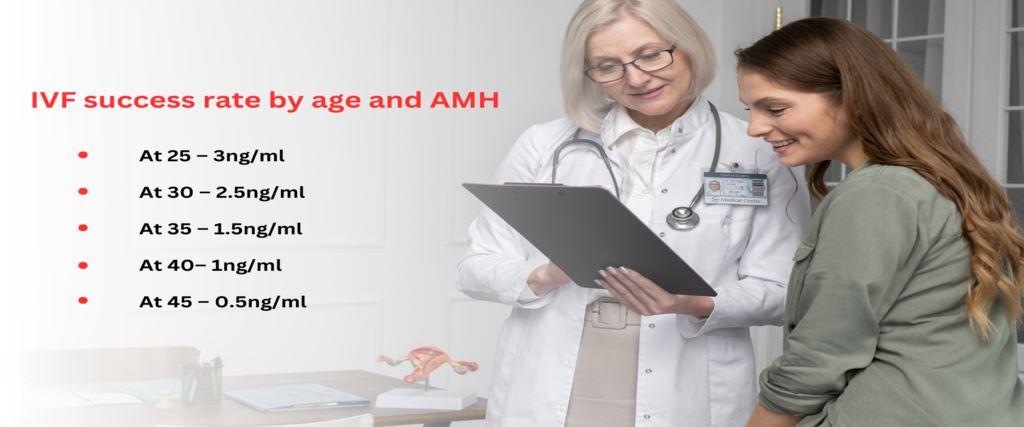
National ART data also show that success rates can vary substantially according to patient and treatment characteristics. Therefore, published percentages should not be treated as a personal prediction of pregnancy or live birth.
Does Age Affect IVF Success?
Yes. Age is an important factor when discussing IVF outcomes, particularly when using a woman’s own eggs. However, the individual prognosis depends on several factors rather than age alone.
Your fertility specialist can explain your expected outcome based on your medical history and test results.
How Much Does IVF Treatment Cost?
The cost of IVF varies from patient to patient.
Expenses may include:
- Initial consultation
- Fertility investigations
- IVF medicines and injections
- Ultrasound monitoring
- Egg retrieval
- Laboratory and embryology services
- ICSI, when recommended
- Embryo culture
- Embryo transfer
- Embryo freezing and storage, when required
- Additional procedures or medications
Therefore, it is better to discuss the complete IVF treatment cost with your fertility clinic rather than relying on a single advertised figure.
For couples seeking IVF treatment in Srinagar, the final treatment plan and expected expenses can be discussed during a consultation.
What Are the Risks and Complications of IVF?
IVF is generally considered a safe fertility treatment, but like any medical treatment, it has potential risks.
Possible risks include:
Ovarian Hyperstimulation Syndrome (OHSS)
OHSS can occur when the ovaries respond excessively to fertility medicines. Symptoms can range from mild abdominal discomfort and bloating to more serious complications.
Severe symptoms require prompt medical attention.
Multiple Pregnancy
Transferring more than one embryo can increase the chance of twins or a higher-order multiple pregnancy. Multiple pregnancies carry increased risks for both the mother and babies.
For appropriate patients, single embryo transfer may reduce the risk of multiple pregnancy.
Ectopic Pregnancy
An ectopic pregnancy occurs when a pregnancy develops outside the uterus, most commonly in a fallopian tube. IVF is associated with a risk of ectopic pregnancy, so early follow-up after a positive pregnancy test is important.
Emotional Stress
IVF can be emotionally demanding. The appointments, injections, waiting period and uncertainty around treatment outcomes can create significant stress.
Couples should feel comfortable discussing emotional concerns with their healthcare team and seeking appropriate support when needed.
Frequently Asked Questions About the Five Stages of IVF
1. What are the five stages of IVF?
The IVF process can be broadly explained as pre-cycle testing, ovarian stimulation, egg retrieval, fertilisation and embryo development, followed by embryo transfer.
2. How many days does IVF treatment take?
The duration varies depending on the treatment protocol. An IVF cycle commonly takes several weeks, but individual timelines can be shorter or longer.
3. How many injections are needed during IVF?
There is no fixed number of injections for every patient. The number and type of medicines depend on the stimulation protocol, ovarian response and treatment plan.
4. What happens after egg retrieval?
The collected eggs are assessed in the laboratory. Suitable mature eggs are fertilised with sperm, and resulting embryos are monitored for further development.
5. When is embryo transfer done after egg retrieval?
Depending on embryo development and the treatment plan, transfer may occur a few days after egg retrieval or may be performed later as a frozen embryo transfer.
6. Is bed rest required after embryo transfer?
Prolonged bed rest is generally not required. Your doctor will provide personalised instructions regarding physical activity and medicines after transfer.
7. Is IVF successful on the first attempt?
IVF can result in pregnancy in the first cycle, but success is not guaranteed. Outcomes depend on several individual and treatment-related factors.
8. When should I consult an IVF specialist?
You may consider a fertility evaluation if you have been trying to conceive without success, have known fertility problems, irregular ovulation, blocked tubes, significant male-factor infertility or other factors that may affect fertility.
Why Choose Imprimis IVF & Fertility Centre in Srinagar?
If you are considering IVF treatment in Jammu & Kashmir, Imprimis IVF & Fertility Centre in Srinagar provides fertility evaluation, IVF treatment, and related assisted reproductive services.
The treatment plan is based on the patient’s fertility history, investigations and individual clinical needs rather than using the same protocol for every couple.
Medical Reviewer: Imprimis IVF & Fertility Centre
Last Updated: September 2026
Clinic Information
Imprimis IVF & Fertility Centre – Srinagar
Address: 2nd Floor, S R Plaza, Hyderpora Flyover, Hyderpora, Srinagar – 190014
Phone: 9650777084 / 9797756111
If you are considering IVF, schedule a consultation with a qualified fertility specialist to understand your diagnosis, treatment options, expected timeline and estimated cost.