
Low Sperm Count: Causes, Treatment & How to Improve It
Trying to conceive but struggling with low sperm count? If you are searching for low sperm count treatment in Srinagar, you are not alone. Low sperm count is one of the factors that can contribute to male infertility, but it does not automatically mean that natural pregnancy is impossible.
The good news is that several treatment options are available depending on the underlying cause, sperm count, sperm motility, sperm morphology and the fertility status of both partners.
At Imprimis IVF & Fertility Centre, Srinagar, a detailed fertility evaluation can help identify possible male fertility factors and determine whether lifestyle changes, medical treatment, IUI, IVF or ICSI may be appropriate.
If a semen analysis has shown a low sperm count, the first step is to understand what the result means and why it may have occurred.
What Is Low Sperm Count?
Low sperm count means that the concentration or number of sperm in the semen is below the reference range used for semen analysis.
A semen analysis does more than simply count sperm. It generally evaluates several important parameters, including:
- Semen volume
- Sperm concentration
- Total sperm number
- Sperm motility
- Progressive motility
- Sperm morphology
A single semen parameter does not determine whether a man is fertile or infertile. The complete semen analysis should be interpreted along with medical history, physical examination and the fertility status of both partners.
This is particularly important because sperm count and sperm quality can vary between semen samples.
What Is Oligospermia?
Oligospermia, also called oligozoospermia, is the medical term used for a low sperm concentration.
It is diagnosed through semen analysis, which is one of the most important tests used during the evaluation of male infertility.
Depending on the individual case, a fertility specialist may recommend repeating the semen analysis to confirm an abnormal result and assess other sperm parameters.
Oligospermia may occur along with other sperm abnormalities, including:
- Asthenozoospermia: reduced sperm motility
- Teratozoospermia: abnormal sperm morphology
- Oligoasthenoteratozoospermia (OAT): abnormalities involving sperm concentration, motility and morphology
- Cryptozoospermia: extremely rare sperm detected after laboratory processing
- Azoospermia: no sperm detected in the ejaculate
Understanding the complete semen profile is important when deciding whether treatment or assisted reproductive techniques may be required.
Can Low Sperm Count Cause Male Infertility?
Yes. Low sperm count can contribute to male factor infertility because fewer sperm may be available to travel through the female reproductive tract and reach the egg.
However, male fertility depends on more than sperm concentration.
Doctors may also consider:
- Sperm motility
- Sperm morphology
- Total motile sperm count
- Sperm production
- Hormonal health
- Testicular health
- Ejaculation and sperm transport
- The female partner’s reproductive health
- Age of both partners
- Duration of infertility
For this reason, both partners may need a fertility evaluation.
If you are experiencing difficulty conceiving, a comprehensive male and female infertility evaluation can help identify possible causes and guide treatment.
Symptoms of Low Sperm Count
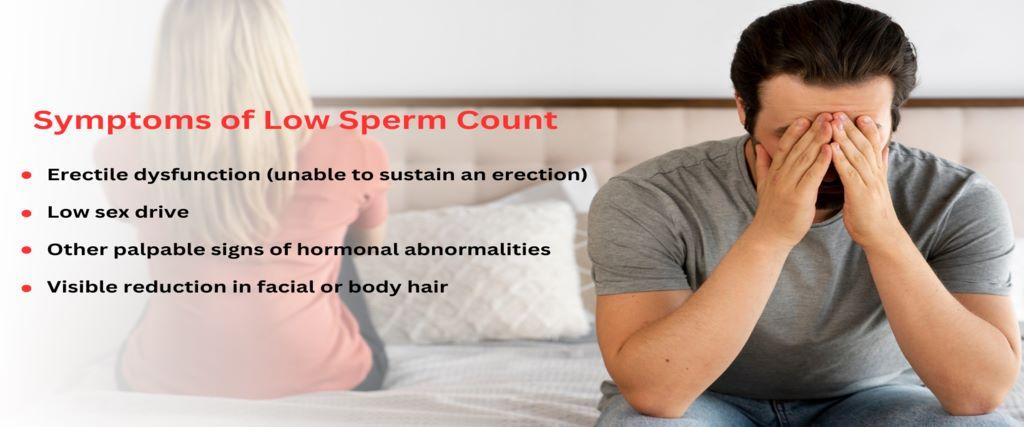
Low sperm count often does not cause obvious symptoms. Many men discover that they have low sperm count only after undergoing fertility testing.
Difficulty conceiving may be the first noticeable sign.
Some men may also experience symptoms related to an underlying medical condition, such as:
- Reduced sexual desire
- Erectile difficulties
- Problems with ejaculation
- Testicular pain or discomfort
- Testicular swelling or a lump
- Reduced facial or body hair
- Signs of hormonal imbalance
These symptoms do not necessarily mean that sperm count is low. A semen analysis and medical evaluation are needed to identify the actual cause.
What Causes Low Sperm Count?
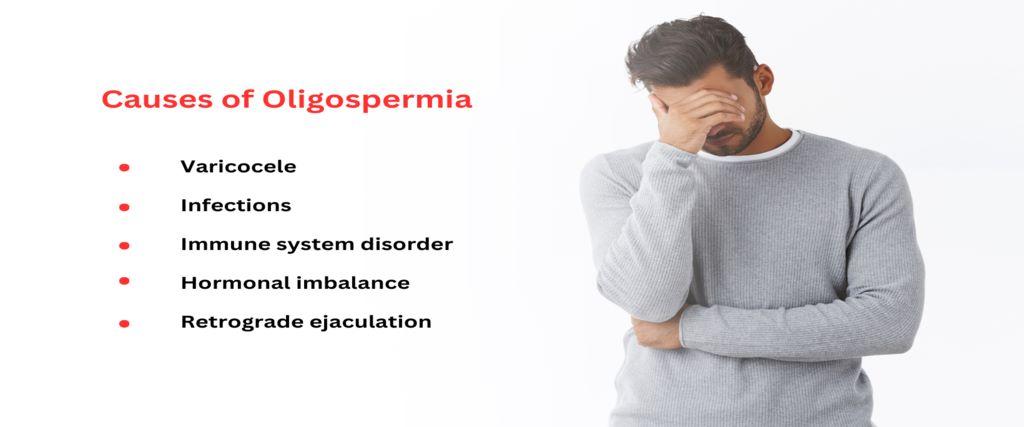
Low sperm count can have several possible causes. Medical conditions, hormonal problems, genetic factors, environmental exposure, and lifestyle habits may all play a role.
Varicocele
A varicocele is an enlargement of veins within the scrotum around the testicle.
In some men, varicocele may affect the testicular environment and sperm production. It is one of the potentially treatable factors associated with male infertility.
A fertility specialist can determine whether a varicocele may be contributing to abnormal semen parameters.
Hormonal Imbalance
Hormones have an important role in sperm production.
Problems involving the hypothalamus, pituitary gland, or testes can interfere with the hormonal signals required for normal sperm production.
Depending on the medical history and semen analysis results, a doctor may recommend hormonal tests such as testosterone, FSH, and LH.
Hormonal treatment should only be taken after proper medical evaluation.
Infections
Certain infections can affect the male reproductive system and may interfere with sperm production, sperm function, or the transport of sperm.
Some infections can also cause inflammation or scarring within the reproductive tract.
If an infection is suspected, the doctor may recommend appropriate testing and treatment.
Problems With Sperm Production
The testicles produce sperm. Conditions affecting testicular function can reduce sperm production.
Possible factors include:
- Testicular injury
- Certain medical conditions
- Previous infections
- Hormonal disorders
- Genetic conditions
- Certain medications or treatments
Severe problems with sperm production may result in very low sperm counts or azoospermia.
Blockage in the Reproductive Tract
Sometimes sperm production may occur normally inside the testicles, but sperm may be unable to enter the ejaculate because of a blockage.
This can lead to obstructive azoospermia.
The location and cause of the blockage need to be evaluated before deciding on treatment.
Previous Surgery or Injury
Certain surgeries or injuries involving the testicles, scrotum, prostate, bladder, pelvis, or reproductive tract may affect sperm production, sperm transport, or ejaculation.
A detailed medical history can help a fertility specialist identify whether previous surgery or injury may be relevant.
Obesity and Excess Weight
Excess body weight may be associated with hormonal changes and other health conditions that can affect male reproductive health.
Maintaining a healthy weight through a balanced diet and regular physical activity can support overall health and may also benefit reproductive health.
Weight management should be viewed as part of a broader fertility plan rather than a guaranteed treatment for low sperm count.
Heat Exposure
Normal sperm production requires an appropriate testicular temperature.
Repeated or prolonged exposure to excessive heat may affect sperm production in some men.
If your work or lifestyle involves significant heat exposure, discuss it with your fertility specialist.
Smoking, Alcohol and Substance Use
Smoking and excessive alcohol consumption can negatively affect overall health and may be associated with impaired male reproductive function.
Recreational drugs and anabolic steroids can also interfere with normal hormone production and sperm formation.
Men planning to conceive should avoid self-medication, particularly testosterone or anabolic steroid use. Testosterone treatment can suppress sperm production and should only be considered under appropriate medical supervision.
Stress and Poor Lifestyle Habits
Chronic stress, inadequate sleep, physical inactivity, and an unhealthy diet can affect overall health.
A healthy lifestyle can support general reproductive health and may form an important part of a comprehensive male infertility treatment plan.
How Is Low Sperm Count Diagnosed?
The main investigation for low sperm count is a semen analysis.
A semen analysis evaluates several characteristics of the semen and sperm, including:
- Sperm concentration
- Total sperm number
- Sperm motility
- Progressive motility
- Sperm morphology
- Semen volume
Because semen parameters can vary, your doctor may recommend a repeat test when the initial result is abnormal.
Depending on your symptoms, medical history, and semen-analysis results, further evaluation may include:
- Physical examination
- Hormonal blood tests
- Testicular or scrotal evaluation
- Assessment for varicocele
- Genetic testing in selected cases
- Evaluation for reproductive-tract blockage
- Additional male infertility investigations
A comprehensive evaluation helps determine whether the low sperm count has a potentially treatable cause.
Can You Get Pregnant With a Low Sperm Count?
Yes, pregnancy can still be possible with a low sperm count.
The possibility of pregnancy depends on several factors, including the number of sperm, sperm movement, sperm morphology, the underlying cause, and the fertility status of the female partner.
Some couples may conceive naturally after addressing an underlying problem or improving relevant lifestyle factors.
For others, fertility treatment may be recommended.
Depending on the individual case, options may include:
- Medical treatment
- Lifestyle modification
- IUI
- IVF
- ICSI
- Sperm retrieval procedures in selected cases
The appropriate treatment should be determined after evaluating both partners.
Low Sperm Count Treatment
Treatment for low sperm count depends largely on the underlying cause and severity of the sperm abnormality.
There is no single treatment that works for every man.
A fertility specialist may recommend lifestyle changes, treatment of an underlying condition, or assisted reproductive techniques such as IUI, IVF, or ICSI.
Lifestyle Changes
Healthy lifestyle habits may support overall male reproductive health.
Helpful measures may include:
- Maintaining a healthy body weight
- Eating a balanced and nutritious diet
- Exercising regularly
- Avoiding smoking
- Limiting excessive alcohol consumption
- Avoiding recreational drugs
- Managing stress
- Getting adequate sleep
- Avoiding unnecessary heat exposure
- Taking medicines only as prescribed
Do not start testosterone, fertility medicines, or supplements without consulting a qualified doctor.
Treatment of an Underlying Medical Condition
If an underlying medical condition is contributing to low sperm count, treating that condition may be an important part of fertility management.
Depending on the diagnosis, treatment may involve:
- Medical therapy
- Hormonal treatment in selected cases
- Treatment of infection
- Surgical treatment of selected conditions
- Treatment of varicocele where appropriate
- Management of other health conditions
The treatment should always be based on an individual medical assessment.
IUI for Low Sperm Count
Intrauterine insemination (IUI) is an assisted reproductive technique in which a semen sample is processed in the laboratory and prepared sperm are placed directly into the uterus around the time of ovulation.
IUI may be considered for selected couples with mild male-factor infertility when the available motile sperm are considered suitable.
When the sperm count or total motile sperm count is very low, IUI may be less suitable, and the fertility specialist may discuss IVF with ICSI.
Learn more about IUI treatment in Srinagar.
IVF for Low Sperm Count
In vitro fertilisation (IVF) is an assisted reproductive treatment in which eggs are collected from the ovaries and fertilised with sperm in a laboratory.
IVF may be considered when:
- Male-factor infertility is significant
- Other fertility factors are present
- Previous fertility treatment has not resulted in pregnancy
- The overall fertility assessment indicates IVF
During an IVF cycle, the resulting embryo may be transferred into the uterus when the fertility specialist considers it appropriate.
Read more about IVF treatment in Srinagar.
ICSI for Low Sperm Count
Intracytoplasmic sperm injection (ICSI) is a specialised fertilisation technique performed as part of an IVF cycle.
During ICSI, an embryologist injects a single viable sperm directly into an egg to assist fertilisation.
ICSI may be considered in cases of significant male factor infertility, including very low sperm numbers or certain severe sperm abnormalities.
In selected men with very few or no sperm in the ejaculate, sperm may be obtained through a sperm-retrieval procedure and used for ICSI.
Learn more about ICSI treatment in Srinagar.
Low Sperm Count, Severe Oligospermia and Azoospermia
Not every man with a low sperm count requires the same treatment.
Severe oligospermia means sperm concentration is substantially reduced, while azoospermia means that no sperm are detected in the ejaculate.
Azoospermia can have different causes, including:
- Blockage in the reproductive tract
- Problems with sperm production
- Hormonal disorders
- Genetic conditions
- Testicular problems
Men with severe oligospermia or azoospermia may require a detailed male fertility evaluation.
In selected cases, genetic testing, hormonal testing, imaging, or sperm retrieval procedures may be recommended.
If you have been diagnosed with azoospermia, learn more about azoospermia treatment.
When Should You See a Male Infertility Specialist?
Consider consulting a male infertility specialist if:
- You have been trying to conceive without success
- Your semen analysis shows low sperm count
- Sperm motility or morphology is abnormal
- You have been diagnosed with azoospermia
- You have testicular pain, swelling, or a lump
- You have erectile or ejaculation difficulties
- You have a history of testicular injury or surgery
- You have concerns about your reproductive health
- You have previously undergone unsuccessful fertility treatment
Early evaluation can help identify potentially treatable causes and clarify which fertility treatment options may be appropriate.
For a broader fertility evaluation, you can explore infertility tests in Srinagar.
Low Sperm Count Treatment at Imprimis IVF
If you are looking for low sperm count treatment in Srinagar, the first step is understanding the reason behind the abnormal semen analysis result.
At Imprimis IVF & Fertility Centre, Srinagar, male and female fertility factors can be evaluated to help develop an individualized treatment plan.
Depending on the diagnosis, treatment may include lifestyle guidance, medical management, IUI, IVF, ICSI or other assisted reproductive techniques.
Our fertility team can also evaluate conditions associated with male factor infertility, including low sperm count, abnormal sperm motility, severe sperm abnormalities and azoospermia.
Explore our male infertility treatment resources to learn more about male reproductive health and fertility treatment.
Frequently Asked Questions About Low Sperm Count
What is considered a low sperm count?
A low sperm count refers to sperm concentration or total sperm number below the applicable laboratory reference range. A semen analysis should be interpreted together with sperm motility, morphology and the overall clinical picture.
Can you get pregnant with a low sperm count?
Yes. Pregnancy may still be possible with a low sperm count. Depending on the cause and severity, couples may consider natural conception, medical treatment, IUI, IVF or ICSI.
Can low sperm count be treated naturally?
Healthy lifestyle habits such as maintaining a healthy weight, exercising regularly, avoiding smoking and excessive alcohol consumption, eating a balanced diet, and managing stress may support overall reproductive health. However, the appropriate treatment depends on the underlying cause.
Can IVF work with low sperm count?
Yes. IVF may be an option for selected couples experiencing male-factor infertility. When significant sperm abnormalities affect fertilisation, ICSI may be performed as part of the IVF cycle.
Is ICSI better than IVF for low sperm count?
ICSI is not a separate alternative to IVF. It is a fertilisation technique performed during an IVF cycle. It may be considered when significant male-factor infertility makes conventional fertilisation less suitable.
Can pregnancy happen with very low sperm count?
Pregnancy may still be possible when very few viable sperm are available. Depending on the cause, IVF with ICSI and, in selected cases, sperm retrieval may be considered.
Is azoospermia the same as low sperm count?
No. Oligospermia means a low sperm concentration, whereas azoospermia means that no sperm are detected in the ejaculate. Azoospermia requires further evaluation to identify the possible cause.
Medical Review & Author Information
Medically Reviewed By: Imprimis IVF Fertility Specialist Team
Speciality: Reproductive Medicine, IVF & Male Infertility
Clinic: Imprimis IVF & Fertility Centre, Srinagar
This article provides general information about low sperm count, oligospermia, male infertility, semen analysis, IVF, IUI and ICSI. Fertility treatment is individualised, and diagnostic or treatment recommendations may differ depending on each patient’s medical history and fertility assessment.
Last Updated: September 2026
Conclusion
Low sperm count can be an important factor in male infertility, but it does not necessarily mean that becoming a parent is impossible.
The right approach is to identify the possible cause through semen analysis and appropriate fertility evaluation. Depending on the diagnosis, treatment may include lifestyle changes, medical management, IUI, IVF, ICSI, or sperm-retrieval procedures.
If you are searching for low sperm count treatment, consult a qualified fertility specialist to understand your diagnosis and available treatment options.
At Imprimis IVF & Fertility Centre in Srinagar, individualised fertility evaluation and treatment planning can help couples understand their options on their journey toward parenthood.