IVF treatment in India has become one of the most trusted and effective solutions for couples struggling with infertility. At Imprimis IVF Centre, we offer advanced fertility treatments backed by cutting-edge technology, experienced specialists, and compassionate care. Our goal is to help every couple achieve their dream of parenthood with the highest possible success rates.

In vitro fertilization (IVF) is a highly advanced procedure where fertilization takes place outside the body, followed by embryo transfer into the uterus. It is ideal for conditions like blocked fallopian tubes, PCOS, male infertility, low AMH, unexplained infertility, and repeated pregnancy loss. With rising awareness and improved techniques, IVF success rates in India have significantly increased, making it a preferred destination for fertility treatment.

At Imprimis IVF Centre, we provide personalized IVF treatment plans tailored to each patient’s medical history and fertility condition. Our services include ICSI treatment, blastocyst culture, fertility preservation, donor programs, and advanced genetic testing. We combine affordability with world-class standards, ensuring that patients receive the best care without financial stress.

If you are searching for the best IVF treatment in India, understanding the IVF process, cost, success rates, and latest technologies is crucial. Our blog category covers everything you need to know—from expert advice and fertility tips to real IVF success stories.

Start your fertility journey with confidence. Trust Imprimis IVF Centre for safe, affordable, and successful IVF treatment in India.

Enlarged Uterus: Causes, Symptoms, and Treatment

Introduction to Enlarged Uterus

Enlarged Uterus – The uterus is a hollow organ in the pelvis and comprises two parts: the endometrium, which thickens during pregnancy, and the myometrium, which supports the uterus internally. Three layers comprise the uterus: the innermost layer is called the glandular or functional layer; this portion of the uterine wall secretes mucus and blood vessels that feed the endometrium.

The middle layer is called the serous or storage layer; this portion of the uterine wall stores blood in case of anemia. Finally, there is an outermost layer called muscular or adventitial; this portion of the uterine wall helps support and shape the uterus. A woman’s reproductive organs comprise her cervix, vagina, fallopian tubes, and ovaries (the ovary).

The term “enlarged uterus” describes a condition in which the size of the endometrium (uterine lining) increases beyond normal limits. The syndrome may start after menopause or present at birth and last for the rest of one’s life. Significant uterus syndrome is sometimes called leiomyomata.

The most common cause of significant uterus syndrome is an inherited disorder called uterine leiomyoma (unlike fibroids, leiomyomas are not cancerous). Leiomyomas are usually benign tumors composed of smooth muscle cells which frequently line the uterus’ interior. They can grow and increase over time, resulting in a larger uterus with an enlarged endometrium.

The most common cause of infertility is an enlarged uterus (endometriosis). An enlarged uterus can occur due to pelvic inflammatory disease (PID), endometriosis, or adenomyosis (a condition in which endometrial tissue grows outside of the uterus). 

Causes of Enlarged Uterus
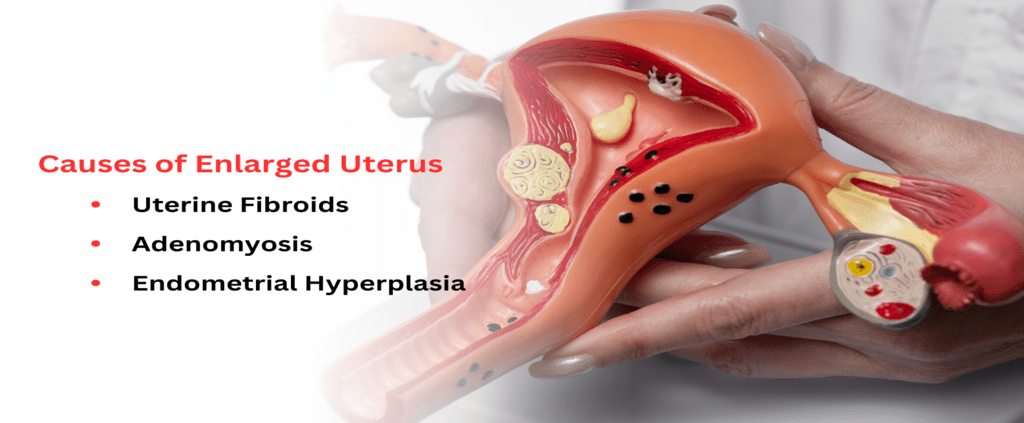
Causes of Enlarged Uterus

The common causes of an enlarged uterus may be medical illnesses in the background, like polycystic ovarian syndrome (PCOS), endometriosis, or pelvic inflammatory disease (PID). However, other factors, such as excessive weight gain or breastfeeding, can play a role occasionally.

1. Uterine Fibroids

Fibroids are benign tumors that usually occur in the uterus, although they can sometimes be found elsewhere in the body. The fibroid may be a single tumor, or it may consist of several smaller tumors. Fibroids can cause pain at the time of menstruation, as well as abnormal bleeding and other problems. If a woman thinks she has fibroids, she should see her doctor to get checked out.

2. Adenomyosis

Adenomyosis is when the muscle layer around your uterus becomes thick and lumpy instead of smooth and elastic like normal muscle tissue. This can cause problems with your periods and make them irregular or heavy, possibly leading to anemia or blood clots that may cause a stroke or a heart attack.

If you have adenomyosis, you may also experience painful cramps or bleeding between periods or irregular intervals during your cycle. Your doctor will check for adenomyosis based on the symptoms you report, your medical History, and any physical exam findings he observes during an exam of your cervix (the lower part of your uterus).

3. Endometrial Hyperplasia

Endometrial hyperplasia can develop if a woman has multiple risk factors for endometrial cancer, such as:

  1. Women after 35 years of age.
  2. Previous History of breast cancer
  3. History of blood clots in your veins (deep-vein thrombosis)
  4. Family history of endometrial cancer
  5. A family history of uterine polyps

Symptoms and Impact on Fertility
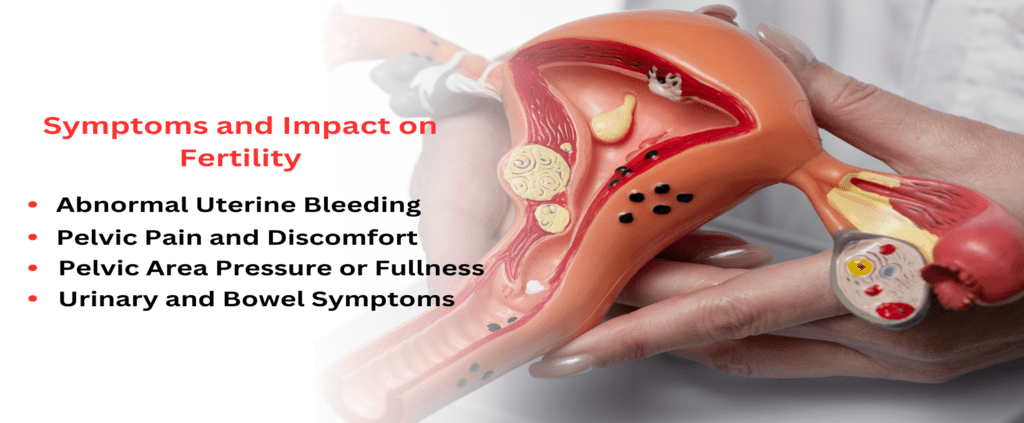
Symptoms of Enlarged Uterus

1. Abnormal Uterine Bleeding

Abnormal uterine bleeding can be a sign of an enlarged uterus. This is also known as menorrhagia. It occurs because the blood flow to the uterus is restricted due to an enlarged uterus. In most cases, it happens due to pregnancy and childbirth. An enlarged uterus may be to blame for lower back or abdomen pain and bleeding between periods.

2. Pelvic Pain and Discomfort

If your uterus has grown too large for its good, it may press against other organs in your pelvis (it comprises two bones: ilium and pubic bone). This pressure can cause pelvic pain, back pain, and lower abdominal discomfort. Another symptom is constipation due to pressure on the rectum from the enlarged uterus pressing against it during childbirth or periods (for example, during menopause).

3. Pelvic Area Pressure or Fullness

Pelvic pain and discomfort are common complaints of women with enlarged uteri. This can be due to pressure or fullness in the pelvis and may also result in spasms or cramping that can be uncomfortable for both you and your doctor to deal with. 

4. Urinary and Bowel Symptoms

Urinary and bowel symptoms such as urgency, frequency, incontinence (leakage) of urine or stool, constipation, painful urination; sexual dysfunction including vaginal dryness or pain during intercourse

Diagnosing an Enlarged Uterus

1. Medical History and Examination

The medical history and physical examination should focus on ruling out pregnancy, fibroids, and cancer. Medical History includes:

  • History of recent illnesses, injuries, or surgeries that may have affected the uterus.
  • Any current or past health conditions may affect fertility or pregnancy, such as diabetes and high blood pressure.
  • The woman’s age, race, and medical History should be considered when diagnosing a possible enlarged uterus since the condition is more common in older women than in young women.

2. Imaging Tests

The diagnosis is usually benign if an ultrasound shows an enlarged uterus with a thin wall. However, if there is no evidence of pregnancy (e.g., vaginal bleeding or missed period), the diagnosis may be more likely to be uterine fibroids or endometriosis. In this case, a laparoscopy may be performed to confirm the diagnosis and remove any fibroids if they are found during surgery. An MRI may also help assess the embryo’s viability so that it can be frozen for future use if needed.

3. Biopsy or Sampling

A biopsy sample can be obtained with laparoscopy; however, there are risks involved in obtaining this type of tissue (invasive surgery).

Treatment Options for Enlarged Uterus and Infertility
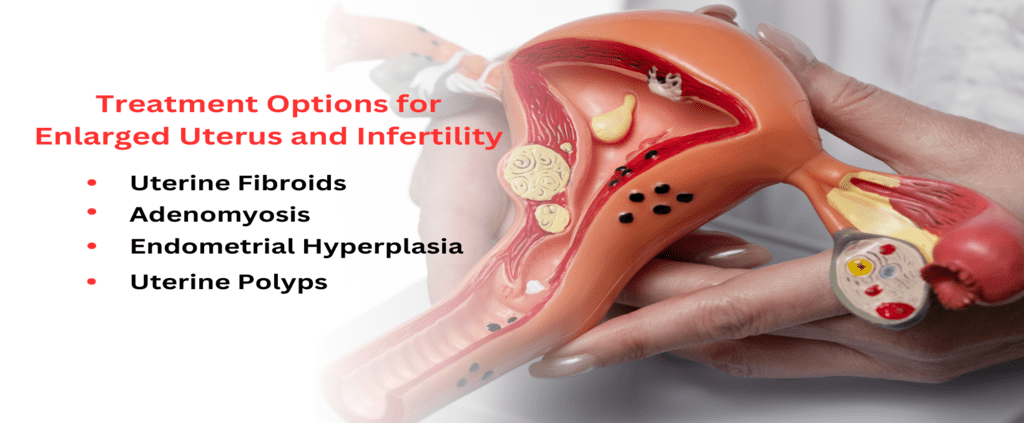
Treatment of Enlarged Uterus

1. Uterine Fibroids

Uterine fibroids are benign tumors that grow in the fibrous lining of the uterus. Numerous symptoms, such as painful or irregular periods, heavy menstrual flow, pain during sex, or bowel motions, might be brought on by them. If fibroids push on the Fallopian tubes and prevent them from carrying eggs from the ovary to the uterus, this can also result in infertility.

2. Adenomyosis

Adenomyosis is when the lining of the uterus becomes thicker than usual and grows into adjacent tissues. The condition may cause infertility, abdominal pain, and urinary symptoms such as an increased need to urinate and blood in the urine.

3. Endometrial Hyperplasia

Endometrial hyperplasia is a disorder when the lining of the uterus experiences an increase in cells, thickening and expanding abnormally. Women with endometrial hyperplasia may have irregular periods or heavy bleeding. 

4. Uterine Polyps

Uterine polyps are growths on the villi or fingerlike projections that line the end of the fallopian tubes — structures that carry eggs from ovaries to the uterus — or other body areas such as the cervix (neck of the womb). Polyps can cause cervical cancer if they become large enough to block the cervical opening (birth canal).

Fertility Treatment Planning and Considerations

An enlarged uterus is a common medical condition, which is more common in women of childbearing age. The uterus is the organ that holds and nourishes the developing fetus during pregnancy.

Although the exact etiology of this ailment is unknown, it could be brought on by hormone imbalances, pregnancy, tumors, growth hormones, or other factors. It usually affects women after the age of 35 and is more common in those with children.

1. Individualized Approach

For mild cases, there are no special considerations for fertility treatment. However, IVF Treatment may be considered if there is no chance of conceiving naturally. If there is a possibility of having problems conceiving later on, egg donation may be an option.

2. Collaboration with Fertility Specialists

In the case of a large size of uterus, Fertility specialists recommend surgical treatment for the removal of extra tissue or organ from the body or removing part of an organ from the body with minimized damage to surrounding tissues. The procedure has been successfully performed using laparoscopy(minimally invasive surgical technique), which provides several advantages like minimized pain during surgery, no open abdomen surgery required, and less risk of infection compared to open abdomen surgery like laparotomy.

Conclusion

It would be best to see a doctor to find the underlying cause of your enlarged uterus. Making an appointment with your gynecologist is an intelligent approach to accomplish this. Calling their office and making an appointment over the phone is an option if you cannot visit them in person.

A regular doctor will check your health history and ask questions about your menstrual cycle, fertility, family history, and other relevant information. They will also conduct a physical exam and ask you questions about your health. This way, they can look at all possible causes of your enlarged uterus and find suitable treatment options.

Why Choose Imprimis IVF for Enlarged Uterus Treatment

Imprimis IVF is ideal for enlarged uterus treatment due to its specialized expertise, advanced technology, comprehensive approach, diverse treatment options, and supportive care. Their team of experienced fertility specialists focuses exclusively on reproductive medicine, ensuring personalized and effective treatment for an enlarged uterus. Equipped with state-of-the-art facilities, Imprimis IVF provides accurate diagnosis and utilizes cutting-edge technology for optimal treatment outcomes. 

Their holistic approach considers various factors contributing to the condition, addressing underlying causes and developing individualized treatment plans. Imprimis IVF ensures that patients receive the most appropriate and effective care with a wide range of treatment options available, including medications, minimally invasive procedures, and fertility preservation techniques.
What is AMH Test – Purpose, Levels, and Treatment

What is AMH Test – AMH is a female hormone produced by the ovaries. An anti-mullerian hormone is so named because it binds to receptors on cells that line the inside of the fallopian tubes. These receptors are part of a complex system that assists sperm in approaching and fertilizing an egg.

Your doctor may additionally order an AMH test to identify an ovarian mass. An AMH test is a simple blood test; if you take it after your period begins and before ovulation (the release of an egg from one ovary), you may see results in one week or less. An AMH test determines anti-mullerian hormone levels related to an individual’s egg count. It is related to your egg count but does not predict your fertility.

Importance of AMH Levels

AMH levels are essential for determining your ovarian reserve but don’t directly correlate with age. AMH levels increase as you age. After menopause, a woman’s AMH level increases as she ages. The higher the AMH level, the more eggs and ovarian reserve.

AMH levels also vary between women.

Some women have more eggs than others, which means they can produce more eggs in their ovaries. It is called having a high ovarian reserve. Others may have fewer eggs or a lower ovarian reserve, which means they may not be able to produce as many eggs in their ovaries and could experience infertility issues if they decide to get pregnant.

Purpose of the AMH Test

AMH is a hormone that’s produced by the ovaries. It helps maintain an egg’s structure and signals the brain to release hormones that make it possible for a woman to conceive.

The test aims to determine whether or not you are at risk for developing cervical cancer. A positive result means that you might have an increased risk of developing cervical cancer and should undergo regular screening tests for this disease.

The AMH test also helps in assessing ovarian reserve. Suppose you have low or no measurable levels of AMH. In this particular situation, you might be at risk for diminished ovarian reserve or premature menopause — two conditions affecting your fertility options and quality Of life.

Predicting Response to Fertility Treatments:

 The test is commonly performed on postmenopausal women to check for signs of estrogen deficiency or osteoporosis, but it can also be used to assess ovarian reserve and fertility status. In some cases, women may request an AMH test if they have irregular periods or have had their uterus removed due to cancer treatment.

AMH Levels

A higher number means more eggs in your ovaries, which means more egg follicles to help produce healthy eggs. A lower number means you may produce fewer eggs than before and may soon lose those eggs.

A woman’s AMH levels are usually between 1.0 ng/mL to 3.0 ng/mL. (nanograms per millilitre). It is the level at which ovulation is most likely to occur, usually within this range.

Low AMH levels, under 1.0 ng/mL, may indicate that the pituitary gland functions normally. The presence of abnormally low levels of certain hormones in the body might suggest an underlying problem within the hypothalamus or the anterior pituitary gland, which plays a crucial role in hormone production and regulation.

Causes of low AMH:

Ovarian cancer or other conditions that affect the ovaries (liver disease, kidney disease, thyroid problems) may cause low levels of AMH. It can also signify early menopause in women who have not gone through menopause. Your doctor can request an AMH test to confirm the diagnosis if she suspects you are going through perimenopause or early menopause. However, this is not a common indication for testing at this time because most women do not go through menopause until after age 50.

Implications for Fertility:

Because low levels of AMH are associated with advanced reproductive age, they may indicate a woman has less menstrual bleeding and will have fewer eggs than younger women. Conception challenges may additionally be experienced by these women, making it harder for them to achieve pregnancy. In addition, some doctors recommend that women with low levels of AMH get fertility treatment if they have trouble conceiving or carrying a pregnancy past six months. 

High AMH levels can be caused by several factors, including:

High AMH Levels Factors

Hormone Imbalance:

If you’re not getting enough progesterone or estrogen, your body will produce more AMH to compensate for the lack of hormones. It may be caused by a condition like Polycystic ovary syndrome (PCOS) and hypothyroidism (an underactive thyroid gland), which can also contribute to these symptoms in women.

Ageing: 

Our bodies naturally produce less AMH and more follicle-stimulating hormone (FSH) as we age. It can lead to higher estrogen levels and lower progesterone levels, which can cause high AMH levels.

Genetic:

If you have a family history of high blood pressure, heart disease, or type 2 diabetes, you could also inherit high levels of AMH from your parents — conditions often linked to high blood pressure or heart diseases risk factors like smoking and obesity.”

Interpretation of AMH Test Results

Some of the considerations that are to be kept in mind while interpreting the AMH Test results are:

Age-related Considerations

A woman’s age does not influence the results of the AMH test. As early as the age of 20, individuals can undergo this test and receive accurate results as late as 44, with most women having a typical result between ages 25 and 35. The AMH level for a woman between 20–25 years old is 4.23 ng/mL.

Relationship to Fertility Potential

The AMH test has been used to predict fertility potential in older women who wish to conceive. A woman’s AMH level is believed to decline with age, which may be related to decreased production of eggs or sperm, decreased ovulation rate, or both.

Other Factors Affecting Interpretation

Women who have undergone cancer treatment or had multiple pregnancies may have slightly lower levels of AMH than those without these conditions. However, these factors do not affect the interpretation of the result and should be considered if they are high enough to cause concern about fertility potential.

Treatment Options

High AMH Levels Treatment

 There are various treatment options available based on different AMH levels.

  • Treatment for Low AMH Levels

In the case of low levels of AMH, various treatment options are available to women with diminished ovarian reserve. Some of these treatments include:

  • Assisted Reproductive Techniques (ART)

ART treatment is designed to help a woman who cannot become pregnant on her own through natural means become pregnant by using assisted reproductive technology such as in vitro fertilization (IVF) or intracytoplasmic sperm injection (ICSI). Assisted reproductive techniques can help a woman conceive if her eggs are not viable enough for IVF or ICSI. For women with low amounts of AMH and a compromised ability to make eggs, this may occasionally also be a possibility.

  • Ovarian Stimulation

This treatment uses hormones to stimulate the release of one or more eggs from your ovaries during a menstrual cycle. The amount of stimulation depends on the woman’s age and her response to previous stimulation treatments, which can vary widely from woman to woman. Because this method involves injecting hormones directly into your bloodstream, there is always a risk that you might develop side effects such as nausea, vomiting, or headaches while receiving medications through your IV line.

  • Egg or Embryo Freezing

In some cases, women may have low levels of AMH due to low levels of progesterone production caused by premature ovarian failure or menopause. Conditions that may require medical treatment before freezing embryos can occur.

Treatment for High AMH Levels

  • Management of Polycystic Ovary Syndrome (PCOS)

Among the many treatment options for women with high AMH levels, ovary-intact women with PCOS often benefit from medication. PCOS are at increased risk of developing endometrial cancer and should be monitored regularly. In addition, ovarian stimulation is an option for women undergoing IVF or other fertility treatments.

  • Treatment for Ovarian Hyperstimulation Syndrome (OHSS)

Ovarian hyperstimulation syndrome (OHSS) can occur when a woman ovulates multiple times more than usual during ovulation induction. This syndrome can be life-threatening if left untreated, so doctors may recommend that patients take medications to reduce the high levels of AMH in their bodies.

At any point in your menstrual cycle, you have the flexibility to undergo the AMH test. A straightforward blood test that provides valuable insights into your reproductive health. It means you or a health care provider can perform it.

In addition to being an excellent diagnostic tool, the AMH test has many other benefits. It can:

  1.  Identify if your ovaries are making too much estrogen. This imbalance of sex hormones can ensue, causing a disruption in their normal levels and functions within the body.
  2.  Identify if there are any issues with egg development or fertilization;
  3.  Evaluate treatment options for PCOS, OHSS, or other conditions related to abnormal ovulation.

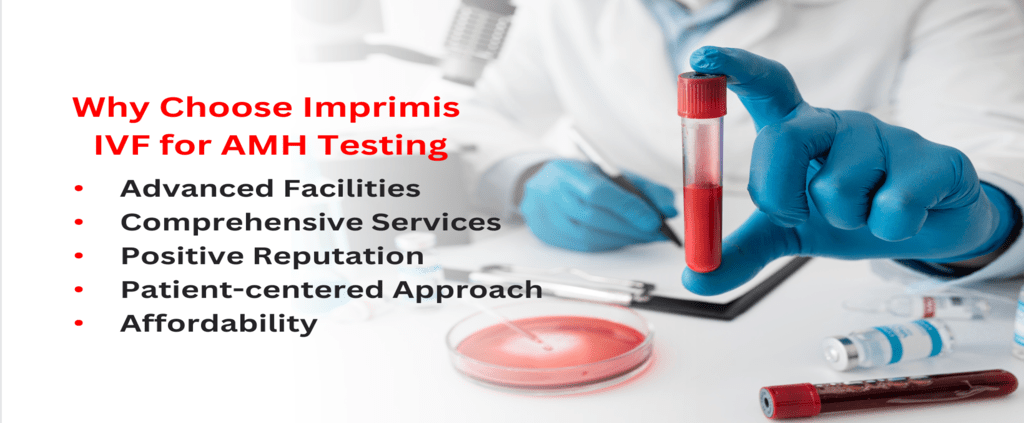
Why Choose Imprimis IVF for AMH Testing?

What is AMH Test

 Imprimis IVF may be a suitable choice for your AMH test due to the following reasons:

 Specialization: Imprimis IVF specializes in reproductive medicine and fertility treatments, ensuring expertise in conducting AMH tests.

  1. Advanced Facilities: They have state-of-the-art laboratory facilities and advanced diagnostic technology for accurate and reliable testing.
  2. Comprehensive Services: Imprimis IVF offers a range of fertility treatments beyond AMH testing, providing integrated care.
  3. Positive Reputation: The clinic has a strong reputation for delivering high-quality care and achieving successful outcomes.
  4. Patient-centered Approach: Imprimis IVF focuses on compassionate and personalized care throughout your fertility journey.
  5. Affordability: They offer cost-effective options and may partner with insurance providers to help manage expenses.

Conclusion

It’s essential to take note of both your age and your AMH levels when trying to conceive. You can use an AMH blood test for the same reasons as the anti-mullerian hormone (AMH) test. It’s a few days long but a relatively quick and easy procedure. If you’re concerned about your fertility and want to do everything possible, including affordable testing. Check with your fertility clinic or IVF experts to learn more about an AMH blood test.

Blocked Fallopian Tubes: Causes, Symptoms, and Treatment

Blocked fallopian tubes are one of the reasons for female infertility. Its medical name is Tubal occlusion. Although several risk factors can increase your chances of getting the disease, there are usually no symptoms.

The fallopian tubes are muscular tubes with a fine hair-like structure inside. These “hairs” help in both directions: They help the sperm to travel up into the uterus. Fimbriae, which look like fingers, adjoin each fallopian tube. When the ovary releases an egg, the fimbria captures and guides it.

Since most eggs are fertilized in the fallopian tubes, they are essential for fertilization. If any injured part is there, for example, by surgery or infection, scar tissue may form.

Describe Hydrosalpinx.

The Greek originates the hydrosalpinx, which means water and tube. A woman’s fallopian tubes are blocked by hydrosalpinx, which is caused by fluid buildup and enlargement at the end of the tube. The end of the tube fibroid closest to the ovary is where it usually occurs, although it can also occur at the end of the tube that connects to the uterus.

One type of infertility caused by tubal factors is blocked fallopian tubes. Fallopian tube cells secrete fluid when blocked, causing the tubes to widen. Preventing an ovulated egg from being fertilized by sperm from the ovary to the fallopian tube prevents fertilization and thus prevents pregnancy. Most likely, hydrosalpinx prevents a fertilized egg from travelling to the uterus for implantation and pregnancy, even if an ovulated egg has come into contact with sperm.

Additionally, it can lead to a dangerous ectopic pregnancy, in which the embryo implants in the fallopian tubes and becomes seriously fatal. Bilateral hydrosalpinx is the condition of having hydrosalpinx in both fallopian tubes simultaneously.

Hydrosalpinx is detrimental to fertility treatments. According to a study, the success rate of assisted reproductive technologies, such as IVF, is reduced by 50% in women with hydrosalpinx fluid compared to women without it. So doctors recommend that patients who use IVF have the hydrosalpinx surgically removed before starting treatment.

If a woman becomes pregnant (naturally or through fertility therapy), the presence of hydrosalpinx impacts the pregnancy outcome. Scientists don’t fully understand why this happens. Still, they believe that hydrosalpinx poisons the egg and embryo and damages the endometrium in such a way as to disgorge the implantation and development of the developing embryo.

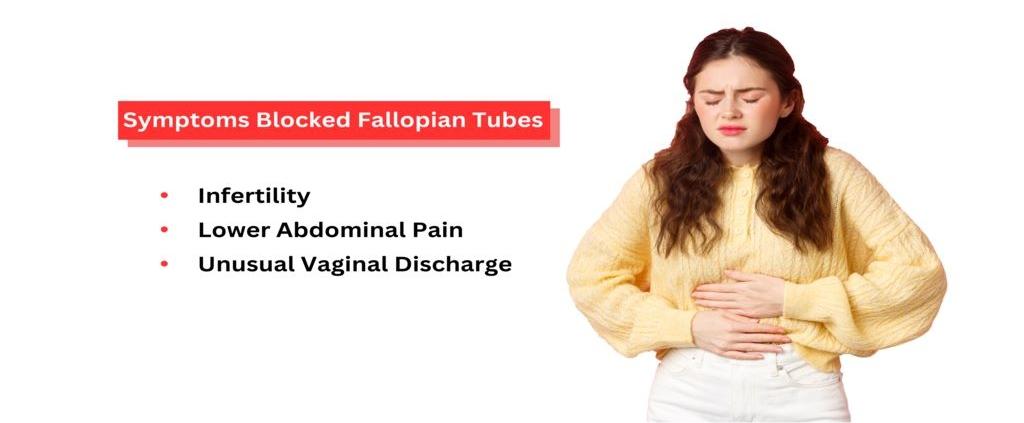
Symptoms of Blocked Fallopian Tubes :

Symptoms of Blocked Fallopian Tubes

Unlike anovulation, which can be indicated by irregular periods, blocked fallopian tubes rarely cause symptoms. The first symptom of blocked fallopian tubes is infertility. In addition to regular fertility tests, if you haven’t gotten pregnant after a year of trying, your doctor may order a special X-ray to check the tubal occlusion.

Pain in the lower abdomen and abnormal vaginal discharge are possible signs of a specific type of fallopian tube blockage called hydrosalpinx, although not all women have these signs. Fertilization and pregnancy are prevented because the fluid blocks the sperm and egg.

Blocked fallopian tubes can have many causes, some of which have unusual symptoms. For example, painful periods and painful sexual activity can be caused by endometriosis and pelvic inflammatory disease (PID).

Symptoms of pelvic infection include the following:
  • general pelvic pain and discomfort during sex
  • nausea and vomiting
  • fever over 101
  • Pelvic pain with severe pain in the lower abdomen or foul-smelling vaginal discharge

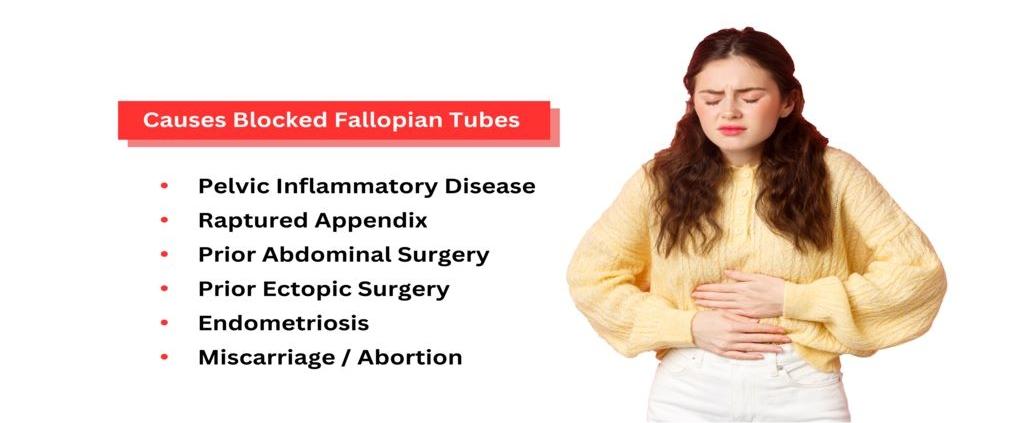
Causes of Blocked Fallopian Tubes :

Causes of blocked Fallopian Tubes

PID is the leading cause of the fallopian tube barrier. However, not all pelvic infections are associated with STDs, pelvic inflammatory disease results from an STD. Additionally, a PID or pelvic infection history increases the risk of tubal obstruction even without PID.

Additional factors that can block the fallopian tubes include:
  • Currently infected or previously infected with gonorrhoea or chlamydia as an STD
  • History of uterine infection resulting in miscarriage or stillbirth
  • History of appendix rupture.
  • history of abdominal surgery
  • ectopic pregnancy in the past
  • previous fallopian tube surgery, including tubal ligation
  • endometriosis

Diagnosis of Fallopian Tubes:

A hysterosalpingogram, or HSG, is a specialized X-ray commonly used to identify blocked tubes. One of the basic fertility tests required of all couples who have problems getting pregnant is the HSG. A small tube injects dye into the cervix during the test. After applying the dye, an X-ray of the pelvic area is taken. If all goes well, the dye should pass through the uterus and fallopian tubes before spreading around the ovaries and into the pelvic cavity. Your fallopian tubes can become blocked if the dye cannot pass through the tubes.

It is essential to know that 15% of women experience a “false positive,” in which the dye fails to enter the tube after passing through the uterus. The site of the blockage appears to be the junction of the uterus and fallopian tubes. If this happens, the doctor may order a new test to confirm or repeat the test one more time. Hysteroscopy, exploratory laparoscopic surgery, and ultrasound are examples of additional tests that may be ordered. It is also possible to request a blood test to detect antibodies against chlamydia.

Effects on Fertility:

The ovaries, uterus, and fallopian tubes comprise the female reproductive system. Getting pregnant can be more difficult if any of these three points are affected by a medical condition. The fallopian tubes connect each of the two ovaries to the uterus. An egg releases one egg every month from the ovary, which stores and releases them randomly.

For example, the left ovary can release an egg in one month, while the right ovary releases an egg for three consecutive months. An egg can be fertilized even if one of the fallopian tubes is blocked. It is less likely to happen if both are blocked.

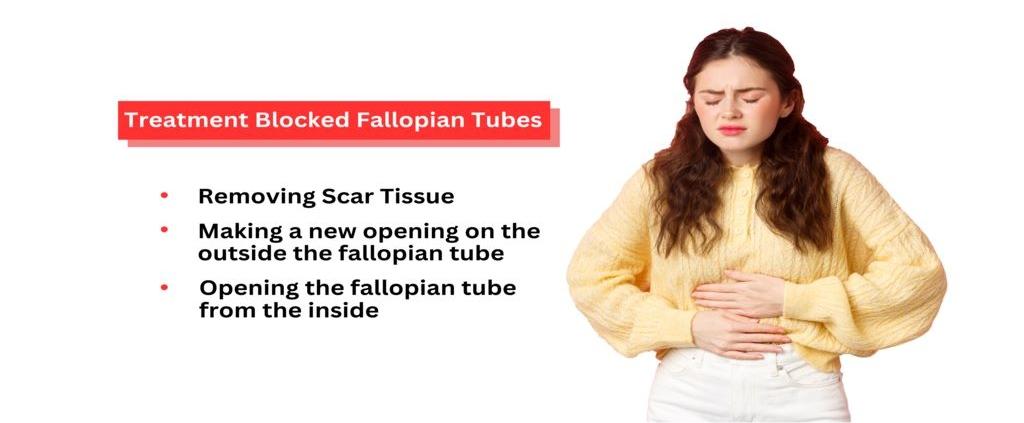
Treatment of Blocked Fallopian Tubes : 

Treatment of Blocked Fallopian Tubes

If you are healthy and one of your tubes is open, you may be able to get pregnant without too much help. Your doctor may prescribe fertility drugs to increase your chances of ovulating on the side of the still-open tube. But if both tubes are blocked, there is no other option.

It is essential to understand that although this medication is provided to aid conception, a blocked fallopian tube cannot be unblocked. Exercise, just like a clogged tube, cannot be unblocked. Surgery is the only option to help clear blocked tubes, but it is only sometimes effective. Below are those you need to know about tubal ligation, IVF, and blocked tubal surgery.

Laparoscopic Surgery

In some circumstances, laparoscopic surgery can remove scar tissue or open blocked channels. Unfortunately, this action plan is only sometimes effective. The chances of success are affected by your age (the younger, the better), the location and severity of the blockage, and its underlying cause. Getting pregnant after surgery is good if there are only a few adhesions.

After surgery to relieve the tubal blockage, the chances of ectopic pregnancy increase. If you become pregnant, your doctor should monitor you closely and be available to advise you on what would be best for you.

However, surgery is not the best solution every time. Vital scars, moderate to severe endometriosis, or moderate to severe male infertility can benefit from IVF. 10 Your doctor can discuss your case with you to determine whether it would be better to have surgery to fix it or go straight to IVF treatment.

In Vitro Fertilization

Before the development of in vitro fertilization (IVF), women with blocked tubes had no choice but to become pregnant if reconstructive surgery did not work or was not an option. IVF makes pregnancy possible.

Fertility drugs are taken to stimulate ovulation during IVF. Sperm from the male spouse or sperm donor is combined with the egg in a laboratory. Ideally, some eggs will fertilize, and others will produce healthy embryos. The uterus receives one or two selected workable embryos.

Blockages in the fallopian tubes are irrelevant. However, studies show that irritated tubes can significantly reduce the chances of IVF success. If you have hydrosalpinx, your doctor may recommend surgical tube removal. IVF may be attempted once you have recovered from your procedure.

Tubal Ligation Reversal

Reversing a tubal ligation is a permanent method of birth control, also known as “tying your tubes.” Various tubal ligations can be performed. A surgeon can cut the tubes, bandage them, sear them, or place special coils inside them, among other options.

The good news is that although this form of birth control is meant to be permanent, many women can take it off. Compared to women who undergo tubal surgery to remove blockages caused by the disease, surgical repair of tubal ligation has a higher chance of success. A microsurgical repair can be up to 50% cheaper per delivery than IVF.

Conclusion

In the above article, we have talked about blocked fallopian tubes. Blocked fallopian tubes are a possible reason for female infertility. The woman’s fallopian tubes are blocked by hydrosalpinx. There are many symptoms like fever, vomiting, pain, etc. We have shared all the details of fallopian tubes in the above article. If you want to know more about blocked fallopian tubes, this article is for you.

If you want a suggestion for treatment for blocked fallopian tubes, you can rely on Imprimis IVF & Fertility Centre. Check out this hospital for Female Infertility Treatment. It is the best Best IVF Centre in Srinagar for blocked fallopian tubes. Here you will get the cooperative staff for treatment. The treatment is affordable and delivers the best quality hospitality services in Srinagar.

PCOD – Causes, Symptoms, and Treatment?

Polycystic ovary disorder (PCOD) is a hormonal disorder that causes irregular menstrual cycles in women. If an ultrasound of a woman’s lower abdomen shows a row of abnormally large, pearl-shaped eggs may be visible. Genetics is one of the many possible causes of PCOD. However, the disease became progressively more common in 1721. Antonio Vallisneri, an Italian physician, was the first to identify it. The disease’s original name was Stein-Leventhal syndrome. Get the PCOD treatment done by Imprimis IVF at a very affordable price in Srinagar.

What is PCOD Treatment?

PCOD, a polycystic ovary syndrome, is a hormonal and metabolic disorder. It happens when a woman’s body does not complete the monthly ovulation process. PCOD patients have fewer than eight menstrual cycles per year. Cysts on the ovarian lining are immature eggs trapped in the ovarian walls because they are not mature enough to leave the body. It causes an imbalance in the body’s hormonal levels, which increases androgen levels. These hormones cause unwanted body hair, weight gain, hair loss, and other medical issues.

Most women’s health problems currently affect 2-40% of women worldwide between 12 and 45 years old. The problem is difficult to solve due to its awareness and prevalence, and no one knows exactly why a woman gets PCOD.

Types of PCOD:

As noted above, PCOD is a relatively new subject of study, so there is still a lot of uncertainty surrounding it. In general, there are two forms of PCOD:

Insulin-Resistant PCOD

Type 1 PCOD, or insulin resistance, is usually accompanied by all the classic symptoms of PCOD, including obesity, facial hair growth, hair loss, and acne, all caused by high amounts of male hormones in the blood. The inability of the body to absorb sugar from the blood, as a result of which fat is stored, is a sign of this type of PCOD. Type 2 diabetes and heart disease can develop in people with PCOD type 1. The doctor advised them to start a diet and lose a few pounds. However, these patients may have difficulty losing weight. In addition to weight loss, patients may take medicines to control blood sugar.

Non-insulin-resistant PCOD

Non-insulin-resistant or type 2 PCOD is a condition in which the patient has no symptoms of insulin resistance but still has PCOD. Other factors, such as adrenal stress, thyroid, vitamin D deficiency, iodine deficiency, and others, can also contribute to non-insulin PCOD. For the body to heal naturally, PCOD type 2 treatment focuses more on rest and rhythmic activities.

PCOD Symptoms:

PCOD Symptoms

Symptoms of PCOD include:

  • Excessive or scanty menstrual flow.
  • Spotting during menstruation.
  • Irregular/late/early periods.
  • Short or long periods.
  • Abdominal pain.
  • Abnormal white discharge.

Causes of PCOD:

PCOD Causes

The exact cause of PCOD in women is unknown, but here are some of the important risk factors:

Excess insulin generation

A body with excess insulin can produce more androgens. This male hormone is too low in women and interferes with ovulation.

Excess androgen synthesis

The ovaries produce abnormally high levels of androgen hormones, which can cause acne and hirsutism (excessive growth of body and facial hair).

Minor Swelling

According to a new study, women with PCOD have low levels of inflammation that lead to increased androgen production, which can cause heart or vascular problems.

Heritage

Women with PCOD show a specific genetic correlation.

PCOD Treatment:

PCOD Treatment

Since PCOD is a chronic condition, many ways exist to treat its symptoms. Most women choose to combine several different strategies. Several Female Infertility Treatment methods are listed here:

Allopathy uses a variety of medications and diets. Women may need to use monthly birth control pills to promote regular periods. A woman may receive ovulation-inducing drugs to cure infertility or to help her get pregnant.

Patients can also follow a diet in addition to these to help with weight loss. To achieve the same results, the doctor may also recommend vigorous activities. When a woman loses even 3% of her body weight, her fertility improves.

Lifestyle Changes for PCOD Treatment:

PCOD affects the hormonal balance of most women. The following actions will help women reduce androgen levels in their bodies:

Maintain a healthy weight.

Losing weight or keeping it off improves overall cholesterol levels in the body, reduces the risk of diabetes, high blood pressure, and heart disease, maintains proper insulin and testosterone levels, and regulates the ovulation phase of the menstrual cycle. Consult a dietitian about a weight loss plan to achieve a healthy BMI.

Limit carbohydrate intake

If you have PCOD, follow a low-carbohydrate diet or a diet high in complex carbohydrates to stabilise your insulin levels. Avoid sugar and starches, and eat fish, meat, eggs, vegetables, and natural fats.

Participate in frequent activities and exercises.

Regular exercise and staying active will help control your weight and blood sugar if you have PCOD.

Can PCOD lead to other chronic diseases?

Yes, PCOD can lead to other chronic diseases. Losing weight can indeed help reverse PCOD. However, PCOD makes weight loss a challenge in itself. Here are some common chronic conditions caused by PCOD:

Diabetes

No one can explain why type 1 PCOD causes type 2 diabetes, but it does, as has already been shown. However, PCOD also causes gestational diabetes, so it doesn’t just cause type II diabetes. We all know that diabetes is a chronic, lifelong disease that contributes to 50% of deaths worldwide. It was India’s top killer in 2016-17. It is also true that most cases of PCOD go untreated in Indian society. Thus, the number of cases of diabetes in women has increased.

Blood Pressure

There is a close relationship between blood pressure and diabetes. No one is sure about the relationship between blood pressure and diabetes. However, the existence of one is a dead sign that the other exists.

Liver Disorders

As we all know, PCOD affects the liver, making it weak and prone to infections. A recent study has highlighted and supported this reality. Hormonal imbalance in the body directly affects the state of the liver. Moreover, it causes obesity, which leads to the development of NAFLD.

Anxiety and Depression

Female sex hormones influence a woman’s psyche. It means mood swings result from any disruption in the delicate balance of hormones. In addition, social isolation and a negative self-image are consequences of obesity. All these, combined with prolonged periods of persistent stress, can cause women to develop anxiety or depression. One study found that postpartum depression is more common in women with PCOD.

Infertility

PCOD is the main contributing factor to female infertility. While PCOD reversal medications can help treat this infertility, some women can only get pregnant after IVF or surgery.

Conclusion

PCOD is a common problem in women. It causes irregular periods and other issues. But it can be prevented by some lifestyle changes and treatments. In the above article, we have talked about PCOD in detail. If you want to know more about PCOD Treatment, this article is for you. If you want medical help in Srinagar, Best IVF Treatment Centre in Srinagar, Imprimis IVF, is always available. You will get the best services and PCOD treatment here.

Imprimis IVF Centre Branches: –

Best IVF Centre in Srinagar

Best IVF Centre in Jammu

IVF Centre in Leh Ladakh

Best IVF Centre in Bhubaneswar

Things to Consider Before IVF Treatment: A Complete Guide

Starting IVF treatment is an important decision, and knowing what to expect can make the process easier to understand and prepare for. Before beginning an IVF cycle, it is important to understand your fertility diagnosis, recommended treatment plan, medications, investigations, potential costs, expected outcomes and possible risks.

Infertility can affect either or both partners. Female factors may include ovulation disorders such as PCOS, endometriosis, reduced ovarian reserve, tubal problems and age-related fertility decline. Male factors, including low sperm count, poor sperm motility or abnormal sperm morphology, can also contribute to infertility.

Before starting IVF, your fertility specialist will assess your individual circumstances and recommend treatment based on your medical history, fertility investigations and reproductive goals.

Things to Consider Before IVF Treatment

If you are planning IVF, consider the following important factors before starting your treatment.

1. Understand Why IVF Has Been Recommended

IVF is not the first treatment for every person experiencing infertility.

Depending on the diagnosis, age, duration of infertility and previous treatment, your fertility specialist may recommend options such as ovulation induction, IUI or IVF.

IVF may be considered for conditions such as:

  • Blocked or damaged fallopian tubes
  • Certain forms of male-factor infertility
  • Reduced ovarian reserve
  • Endometriosis
  • Some cases of unexplained infertility
  • Certain ovulation-related infertility cases
  • Fertility preservation
  • Genetic or reproductive circumstances where IVF with additional testing may be appropriate
  • Previous unsuccessful fertility treatments

The right treatment depends on the individual couple rather than a single diagnosis.

For related information, read about [PCOS and fertility] and [endometriosis and infertility].

2. Have a Complete Fertility Assessment

Before IVF, your doctor will usually review both partners rather than focusing only on the female partner.

Depending on your circumstances, evaluation may include:

For the Female Partner

Your fertility specialist may assess:

  • Menstrual and ovulation history
  • Ovarian reserve
  • Ultrasound findings
  • Uterine anatomy
  • Previous pregnancies and fertility treatments
  • Medical and surgical history
  • Relevant blood tests

Tests may include ovarian reserve assessment, ultrasound and other investigations when clinically indicated.

For the Male Partner

Male fertility should also be assessed.

A semen analysis may evaluate:

  • Sperm concentration
  • Sperm motility
  • Sperm morphology

Further evaluation may be recommended when semen parameters are abnormal or when there is a relevant medical history.

This is important because infertility can involve male, female or combined factors.

Read more about [male infertility].

3. Discuss Your IVF Treatment Plan With Your Doctor

Every IVF cycle is different.

Before starting treatment, ask your fertility specialist:

  1. Why is IVF recommended for us?
  2. What fertility factors have been identified?
  3. What medications will I need?
  4. How long is the expected treatment cycle?
  5. How will my ovaries and hormone response be monitored?
  6. What happens if the response to stimulation is lower or higher than expected?
  7. How will embryos be selected for transfer?
  8. Will embryo freezing be considered?
  9. Should we consider a fresh or frozen embryo transfer?
  10. What additional procedures, if any, may be appropriate?

Having these questions answered can help you understand your treatment rather than relying on general information found online.

4. Understand That IVF Does Not Guarantee Pregnancy

One of the most important things to know before IVF is that IVF cannot guarantee pregnancy or a live birth.

IVF outcomes can vary according to factors such as:

  • Age
  • Ovarian reserve
  • Egg and embryo factors
  • Sperm quality
  • Uterine factors
  • Cause and duration of infertility
  • Previous fertility treatment
  • Embryo development
  • Treatment protocol

Therefore, avoid clinics or websites that promise a guaranteed IVF pregnancy.

Instead, ask your fertility specialist how success rates are measured and which factors are relevant to your individual situation.

Read our detailed guide to [IVF success rate].

5. Understand the IVF Treatment Process

Knowing the basic stages can help you prepare.

Depending on your treatment plan, an IVF cycle may involve:

  1. Initial fertility assessment
  2. Ovarian stimulation
  3. Ultrasound and hormone monitoring
  4. Trigger medication when appropriate
  5. Egg retrieval
  6. Fertilisation in the laboratory
  7. Embryo culture and development
  8. Embryo transfer or embryo freezing
  9. Pregnancy testing at the appropriate time

Not every patient will follow exactly the same protocol.

Your fertility specialist will adjust medications and monitoring according to your ovarian response and medical circumstances.

For a step-by-step explanation, read [the stages of IVF treatment].

6. Know the Possible Role of ICSI

Intracytoplasmic sperm injection, commonly called ICSI, is a laboratory fertilisation technique in which a single sperm is injected directly into an egg.

ICSI may be particularly useful in selected cases of male-factor infertility or previous fertilisation failure.

However, ICSI is not automatically required for every IVF patient.

Your fertility specialist and embryology team can explain whether ICSI is appropriate for your specific circumstances.

Read more about [ICSI treatment in Srinagar].

7. Ask About Embryo Transfer and Embryo Freezing

Before your IVF cycle, discuss what may happen to embryos created during treatment.

Depending on embryo development and your treatment plan, embryos may be:

  • Transferred during the current cycle
  • Frozen for possible future use
  • Used in a later frozen embryo transfer cycle

The number of embryos transferred should be discussed carefully with your fertility specialist because transferring multiple embryos can increase the risk of multiple pregnancy.

Ask your clinic:

  • How many embryos are recommended for transfer?
  • What happens to suitable embryos that are not transferred?
  • What are the benefits and limitations of embryo freezing?
  • Is frozen embryo transfer appropriate in my situation?

8. Review Your General Health Before IVF

Preparing for IVF involves more than fertility tests.

Before treatment, tell your doctor about:

  • Existing medical conditions
  • Previous surgeries
  • Previous pregnancies
  • Current medications
  • Supplements
  • Allergies
  • Smoking or tobacco use
  • Alcohol consumption
  • Previous fertility treatment

Your doctor may recommend additional tests or medical optimisation before starting treatment.

If you have diabetes, thyroid disease, PCOS, hypertension, anaemia or another medical condition, appropriate management may be important before pregnancy.

9. Prepare for IVF Medications and Injections

IVF commonly involves hormonal medications and injections.

Your clinic should explain:

  • Which medication you are taking
  • Why it has been prescribed
  • When and how to take it
  • Possible side effects
  • What to do if you miss a dose
  • When to contact the clinic

Do not change the dose or stop IVF medication without discussing it with your fertility team.

Keeping a simple medication schedule can help you stay organised during treatment.

10. Understand IVF Cost Before Starting Treatment

The cost of IVF treatment can vary considerably.

It may depend on:

  • Treatment protocol
  • Fertility medications
  • Blood tests and ultrasound monitoring
  • Egg retrieval
  • Laboratory procedures
  • ICSI, when indicated
  • Embryo culture
  • Embryo freezing and storage
  • Frozen embryo transfer
  • Additional investigations or procedures

Rather than asking only for the advertised “IVF package,” ask the clinic what is included and which services may cost extra.

11. Choose an IVF Clinic Carefully

Choosing an IVF clinic is an important part of your treatment preparation.

When comparing fertility clinics, consider:

Fertility Specialists

Ask about the qualifications and experience of the doctors who will manage your treatment.

Embryology Laboratory

The IVF laboratory plays an important role in assisted reproductive treatment. Ask about laboratory facilities, embryo culture, witnessing systems and embryo storage procedures.

Treatment Transparency

The clinic should clearly explain:

  • Treatment options
  • Expected costs
  • Medications
  • Additional procedures
  • Potential risks
  • Follow-up care

Individualised Treatment

Your treatment plan should be based on your diagnosis and circumstances rather than a one-size-fits-all package.

Patient Support

Consider whether the clinic provides clear communication and appropriate support throughout the IVF process.

12. Ask These Questions Before Choosing an IVF Centre

Before making a decision, consider asking:

  • What is the recommended treatment for my diagnosis?
  • Who will manage my IVF cycle?
  • What tests do I need before treatment?
  • What medications will I need?
  • What is included in the IVF package?
  • What additional costs should I expect?
  • How are embryos monitored in the laboratory?
  • How many embryos are generally transferred?
  • What happens to suitable embryos that are not transferred?
  • What are the potential risks of treatment?
  • What follow-up care is provided after embryo transfer?

These questions can help you make an informed decision about your fertility care.

13. Maintain a Healthy Lifestyle Before IVF

A healthy lifestyle can support general health while preparing for pregnancy.

Consider:

  • Eating a balanced diet
  • Maintaining a healthy weight where appropriate
  • Staying physically active as advised
  • Avoiding smoking and tobacco
  • Avoiding recreational drugs
  • Avoiding alcohol when pregnancy is possible
  • Taking prenatal supplements such as folic acid when recommended
  • Getting adequate sleep
  • Managing stress in healthy ways

Lifestyle changes cannot guarantee IVF success, but they can contribute to overall health and pregnancy preparation.

14. Pay Attention to Your Mental and Emotional Wellbeing

IVF can be emotionally demanding.

You may experience excitement, uncertainty, anxiety, disappointment or stress during different stages of treatment.

You do not need to feel positive all the time for IVF to work.

Consider seeking support from:

  • Your partner
  • Family or trusted friends
  • A counsellor
  • A fertility support group
  • Your fertility clinic’s support team

Managing emotional wellbeing is part of taking care of yourself during treatment.

15. Understand the Possibility of More Than One IVF Cycle

Some patients become pregnant after their first IVF cycle, while others may require additional treatment.

An unsuccessful cycle does not automatically mean that future treatment will not work.

If an IVF cycle is unsuccessful, your fertility specialist may review:

  • Ovarian response
  • Number of eggs retrieved
  • Fertilisation
  • Embryo development
  • Endometrial and uterine factors
  • Sperm-related factors
  • Previous treatment history

The next step should be based on the findings from your individual cycle rather than following a fixed formula.

16. Understand Multiple Pregnancy Risks

One important question to ask before IVF is how many embryos should be transferred.

Transferring more than one embryo can increase the chance of multiple pregnancy, which can carry additional maternal and pregnancy risks.

Your fertility specialist will discuss an embryo-transfer strategy based on your age, embryo factors, medical history, and applicable clinical guidance.

17. Understand That IVF Is Not the Same for Everyone

There is no single IVF protocol that works for every patient.

For example, a woman with PCOS may require a different stimulation strategy from someone with reduced ovarian reserve.

Similarly, a couple with severe male-factor infertility may have different laboratory considerations from a couple with unexplained infertility.

This is why a personalised fertility assessment is important before starting treatment.

What Should You Take to Your First IVF Consultation?

Preparing a few important details can make your consultation more useful.

Bring or note:

  • Previous fertility reports
  • Semen analysis reports
  • Ultrasound reports
  • Previous IVF/IUI records
  • Previous pregnancy records
  • List of current medications
  • Medical and surgical history
  • Menstrual-cycle information
  • Questions about cost and treatment
  • Any previous genetic or hormonal test results

Your doctor can then better understand your fertility history and discuss possible treatment options.

IVF Treatment in Srinagar

If you are looking for IVF treatment in Srinagar, choosing a fertility centre should involve more than comparing advertisements or headline success-rate claims.

At Imprimis IVF & Fertility Centre, Srinagar, patients can discuss infertility evaluation, IVF, IUI, ICSI and other fertility treatment options with the fertility team.

Frequently Asked Questions About Preparing for IVF

What should I do before starting IVF?

Before IVF, complete the recommended fertility evaluation, review your medical history and medications with your doctor, follow healthy lifestyle habits and understand your treatment plan and expected costs.

What tests are needed before IVF?

Tests vary between patients. Your fertility specialist may recommend ovarian reserve assessment, ultrasound, semen analysis and other blood or fertility investigations depending on your medical history.

How should I prepare my body for IVF?

Focus on balanced nutrition, appropriate physical activity, adequate sleep, avoiding tobacco and recreational drugs, limiting alcohol and taking recommended prenatal supplements such as folic acid.

Does IVF guarantee pregnancy?

No. IVF can result in pregnancy, but no fertility treatment can guarantee a successful pregnancy or live birth.

What questions should I ask an IVF doctor?

Ask why IVF is recommended, what treatment protocol is planned, what medications you will use, what costs are included, how embryos will be managed, what risks may apply and what alternatives are available.

How much does IVF cost in Srinagar?

The cost varies depending on the treatment protocol, medications, laboratory procedures, ICSI, embryo freezing, frozen embryo transfer, and other individual requirements. Ask the clinic for a current, itemised estimate.

Is ICSI required for every IVF cycle?

No. ICSI may be recommended in selected situations, particularly certain male-factor infertility cases or previous fertilisation failure. It is not automatically necessary for every IVF cycle.

Final Takeaway

Preparing for IVF involves more than starting fertility injections.

Before beginning treatment, understand why IVF has been recommended, complete the appropriate fertility evaluation, review your health and medications, understand the treatment process, discuss embryo transfer, ask about costs and choose a fertility clinic carefully.

Most importantly, remember that IVF outcomes are individual. A personalised treatment plan from a qualified fertility specialist is more useful than relying on general promises or claims of guaranteed success.

Medical Review & Clinic Information

Medical Reviewer: Imprimis IVF Team
Last Updated: September 19, 2026
Clinic: Imprimis IVF & Fertility Centre, Srinagar
Address: 2nd Floor, S R Plaza, Hyderpora Flyover, Hyderpora, Srinagar – 190014

Medical Disclaimer: This article is for general educational purposes and does not replace personalised medical advice, diagnosis or treatment. IVF treatment and investigations vary from patient to patient. Consult a qualified fertility specialist for advice based on your individual medical history.

IVF Diet Chart: Foods to Eat and Avoid During IVF Treatment

IVF Diet Chart: Starting IVF treatment can bring many questions, including one of the most common: What should I eat during IVF?

An IVF diet chart cannot guarantee a successful IVF cycle, and there is no single food that can make an embryo implant or increase IVF success on its own. However, eating a balanced, nutritious diet can support overall health, provide essential nutrients, and help you maintain a healthy lifestyle before and during fertility treatment.

Research on specific dietary patterns and IVF outcomes remains mixed. Some studies have reported associations between healthier dietary patterns and IVF outcomes, while others have not found a consistent benefit. Therefore, diet should be viewed as part of overall preconception and fertility care rather than a replacement for medical treatment.

What Is an IVF Diet Chart?

An IVF diet chart is a practical eating plan designed to help you maintain good nutrition during fertility treatment.

Instead of focusing on a “miracle IVF food,” the goal should be to include a variety of:

  • Vegetables and leafy greens
  • Fresh fruits
  • Whole grains
  • Beans, lentils and other legumes
  • Nuts and seeds
  • Healthy sources of protein
  • Healthy fats
  • Dairy or suitable alternatives
  • Adequate fluids

A healthy dietary pattern can support general health, while fertility treatment addresses the specific medical causes of infertility. The World Health Organisation also recommends healthy lifestyle measures, including a healthy diet and physical activity, for people planning or attempting pregnancy.

Does Diet Increase IVF Success Rate?

This is one of the most searched questions about IVF nutrition.

The short answer is: no specific IVF diet has been proven to guarantee IVF success.

Studies investigating Mediterranean-style diets, fertility diets and individual nutrients have produced inconsistent findings in people undergoing assisted reproductive treatment. Therefore, it is not appropriate to promise that a particular food, drink or diet will improve implantation, egg quality or live birth rates.

However, maintaining a nutritious diet can help support overall health during IVF and pregnancy planning.

Your IVF outcome depends on several factors, including:

  • Age
  • Ovarian reserve
  • Egg and embryo factors
  • Sperm quality
  • Uterine and tubal factors
  • Underlying medical conditions
  • Previous fertility treatment
  • Embryo genetics in selected cases
  • The specific IVF treatment plan

For more information, read our guide to [IVF Success Rate].

IVF Diet Chart: Foods to Eat During IVF Treatment

IVF Diet Chart


There is no mandatory list of “fertility foods.” Instead, aim for a varied and minimally processed diet.

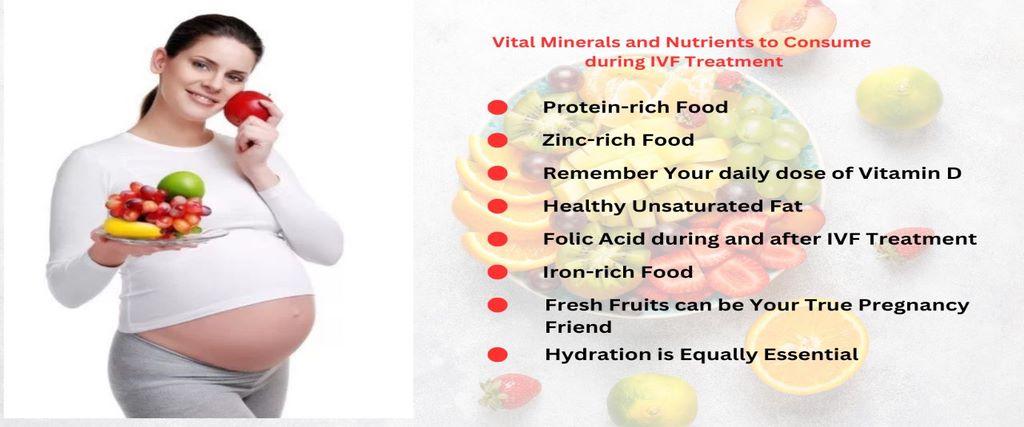
1. Protein-Rich Foods

Protein is an important part of a balanced diet and is needed for tissue growth and repair.

Good choices include:

  • Eggs, when fully cooked
  • Milk and yoghurt
  • Paneer in moderate portions
  • Dal and lentils
  • Chickpeas and kidney beans
  • Soy and tofu
  • Nuts and seeds
  • Chicken and other lean meats
  • Well-cooked fish

There is no universal requirement that every woman undergoing IVF consume exactly 60 grams of protein per day. Protein requirements vary according to body size, activity level, pregnancy status, and medical needs.

2. Green Leafy Vegetables

Include vegetables such as:

  • Spinach
  • Methi
  • Broccoli
  • Cabbage
  • Beans
  • Peas
  • Capsicum
  • Carrots
  • Other seasonal vegetables

Leafy greens also provide folate, fibre and several vitamins and minerals.

3. Whole Grains and High-Fibre Foods

Choose whole or minimally processed carbohydrates more often, such as:

  • Oats
  • Whole-wheat roti
  • Brown rice
  • Millets
  • Quinoa
  • Barley
  • Whole-grain bread

Legumes such as chickpeas, rajma, peas and lentils can also provide fibre and plant-based protein.

4. Fruits

Fresh fruits can be part of a healthy IVF diet.

Options include:

  • Apples
  • Oranges
  • Guava
  • Berries
  • Pomegranate
  • Bananas
  • Papaya
  • Pears
  • Seasonal fruits

There is no strong evidence that one particular fruit, including pineapple, guarantees implantation or improves IVF success. Choose fruits for overall nutrition rather than as a fertility treatment.

5. Healthy Fats

Include moderate amounts of unsaturated fats from foods such as:

  • Nuts
  • Seeds
  • Avocado
  • Olive oil
  • Groundnut oil
  • Mustard oil
  • Fatty fish that is low in mercury

Healthy fats can form part of a balanced dietary pattern, but they should not be viewed as an IVF success booster.

6. Folic Acid and Folate-Rich Foods

Folic acid is particularly important before conception because it helps reduce the risk of neural tube defects.

Women planning pregnancy are generally advised to take 400 micrograms (mcg) of folic acid daily, unless their healthcare professional recommends a different dose.

Food sources of folate include:

  • Green leafy vegetables
  • Beans
  • Lentils
  • Peas
  • Citrus fruits
  • Fortified grains

Your fertility specialist may recommend a prenatal vitamin based on your individual nutritional requirements.

7. Iron-Rich Foods

Iron is essential for making haemoglobin and supporting normal blood function.

Food sources include:

  • Lentils
  • Beans
  • Spinach and other leafy greens
  • Sesame seeds
  • Pumpkin seeds
  • Meat and poultry
  • Iron-fortified cereals

The required amount of iron varies by life stage and pregnancy status. Do not take high-dose iron supplements unless advised by your doctor or after an assessment of your iron status.

8. Calcium and Vitamin D

Calcium and vitamin D are important for overall health and are particularly important during pregnancy.

Dietary sources can include:

  • Milk
  • Curd/yoghurt
  • Fortified dairy alternatives
  • Paneer
  • Eggs
  • Certain fish

Vitamin D deficiency is relatively common, but taking high-dose vitamin D without testing or medical advice is not recommended.

9. Low-Mercury Fish

You do not need to avoid all seafood during IVF.

Cooked, low-mercury fish can be part of a healthy diet. However, certain fish contain higher levels of mercury and should be avoided or limited, particularly during pregnancy. ACOG advises avoiding fish such as shark, swordfish, king mackerel, marlin and bigeye tuna during pregnancy.

Choose fish according to current pregnancy food-safety recommendations and local guidance.

Hydration During IVF

Adequate hydration is important for general health.

Drink water regularly throughout the day, and increase your intake as needed due to heat, exercise, or other circumstances.

However, there is no established evidence that drinking a specific number of glasses of water thickens the uterine lining or directly improves embryo implantation.

If you have a medical condition that requires fluid restriction, follow your doctor’s instructions.

IVF Diet Chart: What to Avoid or Limit

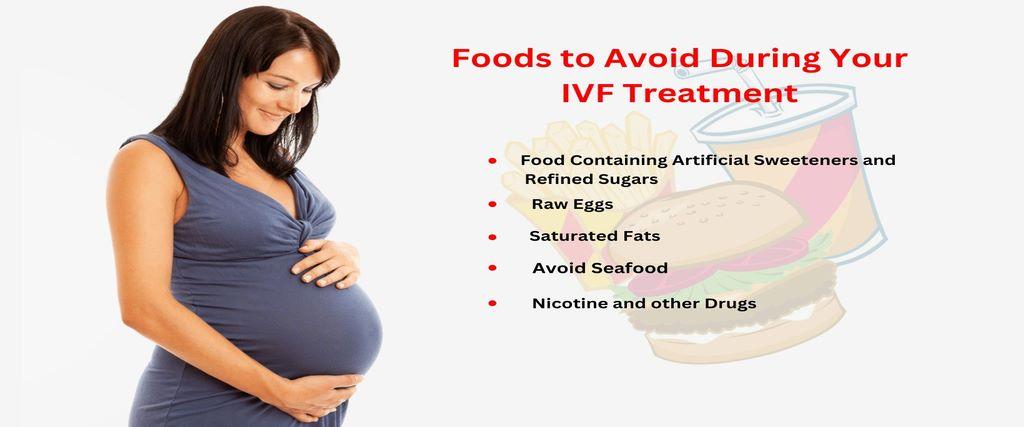
Foods to avoid during IVF Treatment

1. Alcohol

It is safest to avoid alcohol when undergoing IVF and when pregnancy is possible.

Alcohol can have adverse effects during pregnancy, and there is no established safe level of alcohol consumption during pregnancy.

2. Smoking and Tobacco

Avoid smoking and exposure to secondhand smoke.

Tobacco use is associated with poorer reproductive outcomes, and evidence indicates that smoking can negatively affect assisted reproductive treatment outcomes.

3. Excessive Caffeine

You do not necessarily need to eliminate caffeine entirely, but keeping intake below 200 mg per day is a commonly recommended safety limit during pregnancy. Remember that caffeine is also found in tea, chocolate, cola and energy drinks—not only coffee.

If you are unsure about the caffeine content of your usual drinks, ask your fertility specialist or dietitian.

4. Raw or Undercooked Eggs

Avoid raw or undercooked eggs due to the risk of foodborne illness.

Be particularly careful with foods prepared using raw eggs, such as some homemade mayonnaise, mousse and certain desserts.

5. Unpasteurized Milk and Dairy Products

Choose pasteurised milk and dairy products.

Unpasteurized products can carry bacteria that may cause serious foodborne infections during pregnancy.

6. Raw or Undercooked Meat and Seafood

Cook meat, poultry, eggs and seafood thoroughly.

Avoid raw fish and shellfish because they can increase the risk of foodborne illness.

7. High-Mercury Fish

Avoid fish known to contain high levels of mercury, particularly once pregnancy is established.

Your fertility team can provide guidance on safe seafood choices.

8. Highly Processed Foods and Excess Added Sugar

You do not need to eliminate all packaged foods from your diet.

However, try to limit frequent consumption of:

  • Sugary beverages
  • Sweets
  • Cakes and pastries
  • Highly processed snacks
  • Deep-fried foods
  • Processed meats
  • Foods high in added sugar and saturated fat

A balanced diet is more sustainable than extreme food restrictions.

Simple 1-Day IVF Diet Chart

The following is a general example, not a personalised medical diet.

Time Example
Morning Water + prescribed prenatal/folic acid supplement
Breakfast Vegetable oats/poha/upma + fully cooked egg or yoghurt
Mid-morning One seasonal fruit + a small handful of nuts
Lunch Roti/brown rice + dal + vegetables + curd
Evening Roasted chana/makhana or fruit + unsweetened tea
Dinner Roti/millet + cooked vegetables + dal/paneer/chicken/fish
Bedtime Milk or suitable alternative, if tolerated

Your calorie and nutrient requirements may be different. Patients with PCOS, diabetes, thyroid disorders, anaemia, obesity, underweight, food allergies or other medical conditions may need an individualised plan.

Is Five Meals a Day Necessary During IVF?

No.

There is no universal requirement to eat five meals every day during IVF.

Some people prefer smaller, frequent meals because they experience nausea, bloating or reduced appetite during treatment. Others are comfortable with three main meals and one or two snacks.

The important point is to maintain adequate nutrition and follow the dietary advice given by your healthcare team.

Can I Eat Pineapple During IVF?

Yes, pineapple can be part of a normal, balanced diet if you tolerate it.

However, there is no strong evidence that pineapple or its core can improve embryo implantation or increase IVF success.

The same principle applies to other foods sometimes promoted online as “implantation foods.” They can be nutritious, but they should not be presented as fertility treatments.

What Should I Eat After Embryo Transfer?

After embryo transfer, you generally do not need a special “implantation diet.”

Focus on:

  • Balanced meals
  • Adequate protein
  • Vegetables and fruits
  • Whole grains
  • Healthy fats
  • Adequate fluids
  • Folic acid/prenatal supplements as prescribed
  • Safe food preparation

Avoid alcohol, smoking and unsafe foods such as raw or undercooked animal products and high-mercury fish.

Continue your prescribed IVF medications exactly as instructed.

For more information, see [Embryo Transfer] and [IVF Treatment in Srinagar].

Can Diet Improve Egg Quality During IVF?

Diet provides the nutrients required for normal bodily functions, but no specific food or diet has been proven to “repair” or guarantee better egg quality.

Egg quality is influenced by several factors, including age and ovarian biology. A healthy lifestyle can support overall reproductive health, but it should not be promoted as a guaranteed way to improve egg quality.

If you have concerns about ovarian reserve or egg quality, discuss them with your fertility specialist.

Do I Need Supplements During IVF?

Not everyone undergoing IVF needs the same supplements.

Your fertility specialist may recommend supplements based on your medical history, blood tests, dietary intake and pregnancy-planning needs.

Commonly discussed nutrients include:

  • Folic acid
  • Iron
  • Vitamin D
  • Vitamin B12
  • Calcium

Do not start high-dose vitamins, minerals or herbal fertility supplements without medical advice.

IVF Diet and Lifestyle: Other Important Tips

Diet is only one part of preparing for IVF.

Take IVF Medicines on Time

Follow your fertility specialist’s instructions for hormonal injections, tablets and other medications.

Do not change the dose or stop medication without consulting your treatment team.

Stay Physically Active as Advised

Regular physical activity can support overall well-being. However, your activity level may need to be modified during ovarian stimulation or after specific procedures.

Always follow your fertility team’s instructions.

Avoid Smoking and Recreational Drugs

Smoking, tobacco and recreational drug use can negatively affect reproductive health. Tobacco cessation is particularly important when planning pregnancy.

Prioritise Sleep and Emotional Wellbeing

IVF can be physically and emotionally demanding.

Good sleep, emotional support, counselling when needed and realistic expectations can help you manage the treatment journey.

You do not need to maintain “constant positivity” for IVF to be successful. Treatment outcomes are not determined by whether a patient feels positive or anxious.

Is Strict Bed Rest Required After Embryo Transfer?

Routine strict bed rest is generally not required after embryo transfer.

Your fertility clinic may provide specific instructions about activity based on your procedure and medical circumstances. Follow those instructions rather than remaining in bed unnecessarily.

If you experience significant pain, heavy bleeding, breathing difficulty, severe abdominal swelling or other concerning symptoms after treatment, contact your fertility clinic promptly.

Can an IVF Diet Guarantee IVF Success?

No.

There is no diet, food, supplement or lifestyle change that can guarantee pregnancy or live birth through IVF.

IVF outcomes depend on multiple medical and biological factors. A healthy diet can support your overall health, but it should complement—not replace—evidence-based fertility treatment.

The WHO’s current infertility guidance supports evidence-based, patient-centred fertility care alongside healthy lifestyle measures.

Frequently Asked Questions About IVF Diet

What is the best diet during IVF treatment?

A balanced diet containing vegetables, fruits, whole grains, legumes, healthy protein sources and unsaturated fats is a practical approach. Your individual diet should be adjusted for your medical and nutritional needs.

Which foods should I avoid during IVF?

Avoid alcohol and smoking. Also avoid or limit foods with food-safety risks, including raw or undercooked eggs, meat and seafood, unpasteurized products and high-mercury fish.

Can I drink tea or coffee during IVF?

Moderate caffeine intake may be acceptable, but during pregnancy and when pregnancy is possible, keeping caffeine below 200 mg per day is commonly advised.

Can I eat fish during IVF?

Yes. Seafood does not need to be completely eliminated. Choose properly cooked, low-mercury fish and avoid high-mercury varieties according to pregnancy food-safety recommendations.

Is pineapple good for IVF implantation?

Pineapple can be part of a healthy diet, but there is no strong evidence that eating pineapple increases embryo implantation or IVF success.

Should I take folic acid during IVF?

Women planning pregnancy are generally advised to take 400 mcg of folic acid daily, unless their doctor recommends another dose.

Do I need five meals a day during IVF?

No. There is no universal requirement to eat five meals daily. Choose a meal pattern that meets your nutritional needs and feels comfortable for you.

Can an IVF diet improve my chances of pregnancy?

A nutritious diet supports general health, but no specific IVF diet has been proven to guarantee pregnancy or live birth. IVF success depends on many individual factors.

Final Takeaway: IVF Diet Chart

Following a healthy IVF diet chart can help you maintain good nutrition throughout fertility treatment, but there is no miracle food that guarantees implantation or IVF success.

Focus on a varied diet with vegetables, fruits, whole grains, legumes, lean proteins, nuts, seeds, and appropriate sources of healthy fats. Take folic acid and other supplements only as recommended by your healthcare professional.

Most importantly, avoid smoking and recreational drugs, avoid alcohol, keep caffeine moderate, and follow pregnancy food-safety precautions.

Your fertility specialist can help you create an IVF nutrition plan based on your medical history, treatment protocol and nutritional requirements.

If you are planning IVF treatment in Srinagar, you can consult the fertility team at Imprimis IVF & Fertility Centre, Srinagar for an individualised fertility assessment and treatment plan.

Medical Review & Clinic Information

Medical Reviewer: Imprimis IVF Team
Last Updated: September 19, 2026
Clinic: Imprimis IVF & Fertility Centre, Srinagar
Address: 2nd Floor, S R Plaza, Hyderpora Flyover, Hyderpora, Srinagar – 190014

Medical Disclaimer: This article is intended for educational purposes and should not replace personalised medical advice, diagnosis or treatment. Dietary requirements during IVF can vary considerably. Consult your fertility specialist or qualified dietitian before making significant dietary or supplement changes.

IVF vs IUI: Which Fertility Treatment Is Right for You?

When you’re trying to conceive and fertility treatment has become part of your journey, one question often comes up: IVF vs IUI—which is better?

The answer is not the same for every couple.

Intrauterine insemination (IUI) and in vitro fertilisation (IVF) are different fertility treatments used for different clinical situations. IUI is generally less invasive and less expensive, while IVF is a more advanced treatment in which eggs are retrieved and fertilised in a laboratory before an embryo is transferred to the uterus.

The choice between IUI and IVF depends on several factors, including:

  • Age of the female partner
  • Duration of infertility
  • Cause of infertility
  • Ovulation status
  • Fallopian tube condition
  • Sperm count and motility
  • Ovarian reserve
  • Previous fertility treatments
  • Other medical conditions
  • Patient preferences and treatment goals

There is therefore no universal answer to “IVF vs IUI, which is better?” A fertility specialist can recommend an appropriate treatment after evaluating both partners.

IVF vs IUI: Quick Comparison

Factor IUI IVF
Full form Intrauterine Insemination In Vitro Fertilisation
Where fertilisation occurs Inside the reproductive tract In a laboratory
Egg retrieval No Yes
Embryo created in laboratory No Yes
Procedure complexity Less invasive More involved
Typical treatment cost Lower Higher
Treatment duration Usually shorter Usually longer
Useful for Selected infertility cases A wider range of infertility conditions
Multiple pregnancy risk Can increase with ovarian stimulation Can be reduced with single embryo transfer
Treatment choice Depends on diagnosis Depends on diagnosis

The table is a general comparison. Your fertility specialist may recommend a different approach depending on your individual medical circumstances.


What Is IUI?

IUI (Intrauterine Insemination) is a fertility treatment in which specially prepared sperm are placed directly inside the uterus around the time of ovulation.

The aim is to place a higher concentration of motile sperm closer to the fallopian tubes, where fertilisation can occur naturally.

IUI may be performed during a natural ovulatory cycle or together with medicines that stimulate ovulation, depending on the patient’s fertility diagnosis.

How Does IUI Work?

A typical IUI cycle may involve:

  1. Monitoring the menstrual cycle and ovulation.
  2. Using fertility medicines when clinically appropriate.
  3. Monitoring follicular development through ultrasound.
  4. Preparing a semen sample in the laboratory.
  5. Placing the prepared sperm into the uterus using a thin catheter.
  6. Monitoring for pregnancy after the procedure.

The actual insemination procedure is usually brief and does not generally require anaesthesia.

IUI does not involve egg retrieval or laboratory fertilisation.


What Is IVF?

IVF (In Vitro Fertilisation) is an assisted reproductive technology in which eggs are retrieved from the ovaries and fertilised with sperm in a laboratory.

After fertilisation, embryos are cultured, and one or more embryos may be transferred into the uterus.

A typical IVF cycle may involve:

  1. Ovarian stimulation
  2. Ultrasound and hormone monitoring
  3. Trigger medication when appropriate
  4. Egg retrieval
  5. Fertilisation with sperm
  6. Embryo culture
  7. Embryo transfer or freezing
  8. Pregnancy testing

Depending on the treatment plan, additional procedures such as ICSI, embryo freezing or genetic testing may be considered.


IVF vs IUI: What Is the Main Difference?

The biggest difference between IUI and IVF is where fertilisation occurs.

With IUI, sperm are placed inside the uterus and fertilisation must occur naturally within the reproductive tract.

With IVF, eggs are retrieved and fertilised in a laboratory. The resulting embryo is then transferred into the uterus.

This makes IVF a more involved treatment, but it also allows fertility specialists to address a broader range of fertility problems.


When Is IUI Recommended?

IUI may be considered for selected patients with:

Unexplained Infertility

IUI with ovarian stimulation is commonly used as an initial treatment approach for many couples with unexplained infertility.

Current guidance supports treatment pathways that may progress from less invasive approaches such as stimulated IUI to IVF when appropriate. (asrm.org)

Mild Male-Factor Infertility

IUI may be considered when sperm parameters are suitable for insemination after evaluation and processing.

The decision should not be based on a single semen analysis result.

Ovulation Problems

Women with ovulation disorders may sometimes undergo ovulation induction followed by IUI, depending on the underlying condition.

Selected Cases of Cervical-Factor Infertility

IUI can bypass the cervix by placing prepared sperm directly into the uterus.

Donor Sperm Treatment

IUI may also be used with donor sperm when clinically appropriate.

The suitability of IUI depends on factors such as ovarian function, ovulation, fallopian tube status, sperm quality and age.


When Is IVF Recommended?

IVF may be considered when there is a medical reason for a more advanced fertility treatment or when simpler treatments have not been successful.

Potential situations include:

Blocked or Severely Damaged Fallopian Tubes

Because IVF bypasses the fallopian tubes during fertilisation, it may be recommended when the tubes are blocked or significantly damaged.

Severe Male-Factor Infertility

IVF, often combined with ICSI when indicated, may be considered for severe sperm abnormalities or certain situations involving very low or absent sperm in the ejaculate.

Repeatedly Unsuccessful IUI

If appropriately selected IUI cycles do not result in pregnancy, a fertility specialist may recommend moving to IVF.

The number of IUI cycles before IVF is not identical for every patient.

Reduced Ovarian Reserve or Age-Related Fertility Decline

Age and ovarian reserve are important when deciding how quickly to progress through fertility treatment.

For some patients, proceeding directly to IVF may be discussed rather than spending several cycles on less effective treatments.

Endometriosis

Depending on the severity of endometriosis, age and other fertility factors, IVF may be considered.

Genetic or Chromosomal Indications

IVF may be used when preimplantation genetic testing is being considered for an appropriate medical indication.

Other Infertility Factors

IVF may also be recommended when multiple fertility factors are present or when other treatments are unlikely to provide a reasonable opportunity for pregnancy.


IVF vs IUI for Male Infertility

Male-factor infertility can influence the choice between IUI and IVF.

A semen analysis evaluates several important parameters, including:

  • Sperm concentration
  • Sperm motility
  • Sperm morphology
  • Semen volume

IUI may be suitable when there is an adequate number of motile sperm after semen processing.

When sperm abnormalities are more severe, IVF with ICSI (Intracytoplasmic Sperm Injection) may be considered.

ICSI involves injecting a single sperm directly into an egg. It is particularly relevant when there is a clear male-factor indication or a history of fertilisation failure. Current ASRM guidance cautions against using ICSI routinely for non-male-factor infertility without a specific indication. (asrm.org)


IVF vs IUI for Female Infertility

Female fertility can be affected by the ovaries, fallopian tubes, uterus, hormones and age.

IUI may be considered when:

  • At least one fallopian tube is functioning
  • Ovulation can be achieved
  • Sperm parameters are suitable
  • There is no major uterine or tubal factor requiring IVF

IVF may be considered when:

  • Both fallopian tubes are blocked
  • Ovarian reserve is reduced
  • There are significant fertility factors
  • Previous IUI treatment has failed
  • Age or other circumstances make a more direct treatment approach appropriate

A complete fertility evaluation helps determine which treatment is appropriate.


IVF vs IUI Success Rate

One of the most common searches is “IUI vs IVF success rate.”

However, quoting one fixed success percentage can be misleading.

Success depends on factors such as:

  • Age
  • Diagnosis
  • Ovarian reserve
  • Egg and embryo quality
  • Sperm quality
  • Number of treatment attempts
  • Treatment protocol
  • Previous fertility history
  • Clinic and laboratory factors

IVF generally offers a higher chance of pregnancy per treatment cycle than IUI for many infertility situations, but the comparison should be made using the same outcome measure and patient population.

A clinic should therefore not promise a specific pregnancy or live-birth rate without considering the individual patient’s circumstances.

For patients with unexplained infertility, evidence-based guidelines support stimulated IUI as a treatment option before IVF in many cases, while also recognising that factors such as age and treatment history can change the treatment pathway. (asrm.org)


IVF vs IUI Cost

Cost is another important factor when comparing IUI vs IVF.

Generally, IUI costs less per treatment cycle because it does not involve egg retrieval, laboratory fertilisation or embryo culture.

IVF usually costs more because it involves ovarian stimulation, monitoring, egg retrieval, laboratory fertilisation, embryo culture and embryo transfer.

However, the total cost can vary significantly depending on:

  • Medicines and injections
  • Diagnostic tests
  • Number of treatment cycles
  • ICSI
  • Embryo freezing
  • Frozen embryo transfer
  • Genetic testing
  • Donor eggs or sperm
  • Other clinically indicated procedures

Therefore, rather than relying on a single online price, ask the fertility clinic for a personalised treatment estimate and clarify what is included.

For information about local treatment pricing, see our IVF treatment cost in Srinagar and IUI treatment in Srinagar pages.


IUI vs IVF: Which Is More Painful?

Both IUI and IVF can involve some discomfort, but the experience varies from person to person.

IUI

IUI is generally a short procedure. Some women experience mild cramping or temporary discomfort when the catheter is inserted.

IVF

IVF involves more steps and usually includes injectable ovarian stimulation and an egg-retrieval procedure.

Egg retrieval is generally performed with appropriate pain relief or sedation, in accordance with the clinic’s protocol.

Therefore, it is not accurate to describe IVF simply as “painful” or IUI as completely “painless.” Individual experiences vary.


IUI vs IVF: Treatment Duration

IUI usually involves fewer treatment steps than IVF.

An IUI cycle may involve:

  • Cycle monitoring
  • Ovulation induction when required
  • Trigger medication when appropriate
  • Sperm preparation
  • Insemination
  • Pregnancy testing

IVF generally involves more appointments and procedures, including ovarian stimulation, monitoring, egg retrieval, fertilisation and embryo transfer.

The total IVF timeline varies depending on the treatment protocol and whether a fresh or frozen embryo transfer is planned.


Benefits and Limitations of IUI

Potential Benefits of IUI

  • Less invasive than IVF
  • Usually lower cost per cycle
  • Does not require egg retrieval
  • Short procedure
  • May be appropriate for selected infertility diagnoses

Limitations of IUI

  • Not suitable for every infertility condition
  • Requires suitable sperm parameters
  • Usually requires at least one functioning fallopian tube
  • Success can be lower per cycle than IVF
  • Several cycles may be needed
  • Ovarian stimulation can increase the risk of multiple pregnancy

Benefits and Limitations of IVF

Potential Benefits of IVF

  • Can bypass blocked fallopian tubes
  • Useful for many forms of infertility
  • Allows fertilisation to occur in the laboratory
  • Embryos can be frozen for future use
  • ICSI can be used when indicated
  • Genetic testing may be considered in selected cases
  • Can provide a treatment pathway when other fertility treatments have failed

Limitations of IVF

  • More invasive than IUI
  • Usually more expensive
  • Requires ovarian stimulation and egg retrieval
  • Takes more time and monitoring
  • Does not guarantee pregnancy
  • May involve additional procedures and costs

IVF vs IUI: Which One Is Better?

There is no universal answer to “Which is better, IUI or IVF?”

The more appropriate question is:

Which treatment is more suitable for my fertility diagnosis?

IUI may be a reasonable option when the fertility factors are relatively favourable and less invasive treatment is appropriate.

IVF may be more appropriate when there are significant tubal, sperm, ovarian, age-related or other fertility factors, or when previous treatments have not worked.

For some couples, starting with IUI may be appropriate. For others, moving directly to IVF may be discussed.

The WHO’s 2025 infertility guideline also emphasises evidence-based, patient-centred fertility care and progression from simpler to more complex treatment according to the individual’s clinical situation. (who.int)


IVF vs IUI: How Does a Doctor Decide?

Before recommending IUI or IVF, your fertility specialist may assess:

Female Partner

  • Age
  • Menstrual cycle
  • Ovulation
  • Ovarian reserve
  • Fallopian tubes
  • Uterus
  • Previous pregnancies
  • Previous fertility treatment

Male Partner

  • Semen analysis
  • Sperm concentration
  • Sperm motility
  • Sperm morphology
  • Previous fertility history
  • Relevant medical conditions

Couple

  • Duration of infertility
  • Cause of infertility
  • Previous treatment outcomes
  • Genetic considerations
  • Financial and practical preferences
  • Time available for treatment

This assessment helps the fertility team develop an individualised treatment plan.


Can IUI Be Converted to IVF?

Yes. Fertility treatment is often progressive.

A couple may begin with IUI when it is clinically appropriate. If pregnancy does not occur after an appropriate number of cycles, or if new information changes the diagnosis, the fertility specialist may recommend IVF.

For unexplained infertility, ASRM guidance has historically supported a limited course of stimulated IUI followed by IVF when unsuccessful, while age and individual circumstances can influence whether IVF is considered earlier. (asrm.org)


IVF vs IUI Frequently Asked Questions

Is IUI better than IVF?

Neither treatment is universally better. IUI is less invasive and generally less expensive, while IVF can be appropriate for a broader range of infertility conditions. The right treatment depends on the couple’s diagnosis and circumstances.

Is IVF more successful than IUI?

IVF generally has a higher pregnancy potential per treatment cycle than IUI in many clinical situations, but success varies significantly with age, diagnosis and other factors. Comparing percentages without considering the patient population can be misleading.

Is IUI cheaper than IVF?

Generally, yes. IUI usually has a lower per-cycle cost because it does not involve egg retrieval or laboratory embryo development. However, total treatment costs vary.

How many IUI cycles should I try before IVF?

There is no single number for every patient. The decision depends on age, diagnosis, ovarian reserve, sperm parameters and previous treatment. In selected cases of unexplained infertility, several stimulated IUI cycles may be considered before IVF. (asrm.org)

Can IUI work with low sperm count?

It may be possible in selected cases, depending on the severity of the sperm abnormality and the number of motile sperm available after processing. Severe male-factor infertility may require IVF with ICSI.

Can IUI work with blocked fallopian tubes?

IUI generally requires at least one functioning fallopian tube because fertilisation still occurs inside the reproductive tract. If both tubes are blocked, IVF may be considered.

Is IVF painful?

IVF involves more procedures than IUI, including injections and egg retrieval. Pain and discomfort vary between individuals, and clinics use appropriate pain relief or sedation for egg retrieval.

Does IVF guarantee pregnancy?

No. IVF can provide an effective fertility treatment option, but it does not guarantee pregnancy or a live birth.

Which is better for older women: IUI or IVF?

Age is an important factor in fertility treatment planning. Depending on age, ovarian reserve, diagnosis and time available for treatment, a fertility specialist may discuss IVF sooner rather than spending multiple cycles on IUI.


IVF vs IUI in Srinagar

If you are searching for IVF vs IUI in Srinagar, the first step is to understand why pregnancy has not occurred.

At Imprimis IVF & Fertility Centre, Srinagar, a fertility specialist can evaluate both partners and discuss whether IUI, IVF or another fertility treatment is appropriate.

The evaluation may include assessment of ovulation, ovarian reserve, fallopian tubes, semen parameters and other relevant fertility factors.

Clinic Information

Imprimis IVF & Fertility Centre, Srinagar
2nd Floor, S R Plaza, Hyderpora Flyover, Hyderpora, Srinagar, Jammu & Kashmir – 190014

Phone: +91 9650777084 / +91 9797756111

Treatment recommendations should be based on an individual medical evaluation rather than an online comparison.


Final Thoughts: IVF vs IUI

IVF and IUI are not competing treatments where one is always better than the other.

IUI is a less invasive fertility treatment that may be suitable for selected couples. IVF is a more involved treatment that can address a wider range of fertility problems.

The most appropriate option depends on your:

  • Age
  • Fertility diagnosis
  • Ovarian reserve
  • Ovulation
  • Fallopian tube status
  • Sperm parameters
  • Previous treatment
  • Overall reproductive health

If you are unsure whether IUI or IVF is right for you, consult a qualified fertility specialist for an individual assessment.


Medical Reviewer & Editorial Information

Medical Reviewer: Imprimis IVF

Last Updated: September 19, 2026

Clinic: Imprimis IVF & Fertility Centre, Srinagar

Medical Disclaimer: This article is intended for general educational purposes and does not replace professional medical advice, diagnosis or treatment. Fertility treatment should be selected after an appropriate evaluation by a qualified fertility specialist. Individual treatment outcomes vary.

Medical References: World Health Organization (WHO) 2025 Guideline for the Prevention, Diagnosis and Treatment of Infertility; American Society for Reproductive Medicine (ASRM) guidance; European Society of Human Reproduction and Embryology (ESHRE) guidance.

Recurrent Pregnancy Loss: Causes, Diagnosis & Treatment

Experiencing a miscarriage can be emotionally and physically difficult. While miscarriage is relatively common, recurrent pregnancy loss (RPL) requires medical evaluation to understand whether an underlying cause may be contributing to repeated pregnancy losses.

Recurrent pregnancy loss is a distinct reproductive health condition and is different from infertility. According to the latest American Society for Reproductive Medicine (ASRM) guidance, recurrent pregnancy loss is defined as two or more spontaneous pregnancy losses, excluding confirmed molar or ectopic pregnancies. The losses do not necessarily have to occur consecutively.

Many miscarriages, particularly those occurring early in pregnancy, are related to chromosomal abnormalities in the embryo. The likelihood of chromosomal abnormalities also increases with maternal age. However, recurrent pregnancy loss can have several possible causes, and sometimes no single cause is identified even after a detailed evaluation.

If you have experienced repeated miscarriages, consulting an experienced fertility specialist or obstetrician-gynaecologist can help determine whether further testing or treatment is appropriate.

What Is Recurrent Pregnancy Loss?

Recurrent pregnancy loss (RPL) refers to repeated spontaneous pregnancy losses.

Current ASRM guidance defines RPL as the spontaneous loss of two or more pregnancies, excluding confirmed molar and ectopic pregnancies. Pregnancy losses do not have to be consecutive for evaluation to be considered.

The term recurrent miscarriage is also commonly used. Older medical literature may use the term recurrent abortion, but “recurrent pregnancy loss” is generally preferred for patient-focused medical communication.

Recurrent pregnancy loss can be associated with genetic, anatomical, hormonal, metabolic, immune-related and other factors. In some couples, no clear cause is identified.


What Causes Recurrent Pregnancy Loss?

Causes Recurrent Pregnancy Loss

There is no single cause of recurrent miscarriage. A detailed evaluation may consider several factors involving the embryo, chromosomes, uterus, hormones, metabolism, and the health of both partners.

1. Chromosomal Abnormalities

Chromosomal abnormalities are an important cause of early pregnancy loss.

Approximately 50%–60% of first-trimester miscarriages are associated with embryonic aneuploidy, and the likelihood of aneuploidy is strongly influenced by maternal age.

Most chromosomal abnormalities occur sporadically during egg or embryo development. In some cases, however, chromosome abnormalities involving one of the parents may contribute to recurrent pregnancy loss.

When possible, chromosome testing of miscarriage tissue may provide useful information during recurrent pregnancy loss evaluation. The latest ASRM guidance recommends chromosome analysis of pregnancy-loss tissue, when feasible, as an important part of evaluation.

2. Uterine Abnormalities

Problems affecting the structure of the uterus may contribute to pregnancy loss in some women.

These may include:

  • Uterine septum
  • Certain congenital uterine anomalies
  • Fibroids
  • Endometrial polyps
  • Intrauterine adhesions

Your fertility specialist may recommend imaging or other investigations based on your history and symptoms.

3. Antiphospholipid Syndrome

Antiphospholipid syndrome (APS) is an autoimmune condition associated with abnormal blood clotting and specific pregnancy complications.

APS is an established and potentially treatable cause of recurrent pregnancy loss. Testing may be recommended when a patient’s history suggests an increased risk.

Treatment for confirmed obstetric APS may include medications such as low-dose aspirin and heparin under specialist supervision. These medicines should not be started without medical advice. Current evidence does not support routinely prescribing aspirin or anticoagulants to everyone with recurrent pregnancy loss.

4. Thyroid and Metabolic Conditions

Certain medical conditions may be associated with pregnancy loss.

Depending on the individual’s history, evaluation may include conditions such as:

  • Thyroid disease
  • Diabetes
  • Other metabolic disorders

The latest ASRM guidance supports targeted assessment for conditions such as thyroid disease and diabetes when clinically appropriate.

5. Age-Related Factors

Maternal age is an important factor in miscarriage risk because chromosomal abnormalities in eggs and embryos become more common with increasing age.

This does not mean that pregnancy after 35 is impossible or necessarily unsuccessful. However, age should be considered when evaluating recurrent pregnancy loss and planning future pregnancy.

6. Other Factors

Depending on the clinical history, doctors may also consider:

  • Genetic factors
  • Certain anatomical conditions
  • Lifestyle factors
  • Chronic medical conditions
  • Previous pregnancy complications

Not every proposed cause of recurrent miscarriage has strong evidence. Current guidelines recommend targeted evaluation rather than routinely performing every available test.


Recurrent Pregnancy Loss Symptoms

Recurrent Pregnancy Loss Symptoms

Recurrent pregnancy loss itself does not usually have a specific set of symptoms between pregnancies. The main concern is repeated pregnancy loss.

During an individual miscarriage, symptoms may include:

  • Vaginal bleeding or spotting
  • Lower abdominal or pelvic cramping
  • Back pain
  • Passing tissue or clots
  • Decreasing pregnancy symptoms

However, these symptoms do not always mean that a miscarriage is occurring. Bleeding and abdominal pain during pregnancy can have several causes.

Seek urgent medical care if you experience heavy bleeding, severe abdominal or pelvic pain, dizziness, fainting, fever or other concerning symptoms during pregnancy.


When Should You See a Doctor for Recurrent Miscarriage?

If you have experienced two or more pregnancy losses, it is reasonable to discuss recurrent pregnancy loss evaluation with a qualified obstetrician-gynaecologist or fertility specialist. Current ASRM guidance recognises RPL after two spontaneous pregnancy losses.

You should especially seek specialist advice if:

  • You have had two or more miscarriages.
  • You have experienced a second-trimester pregnancy loss.
  • You have irregular menstrual cycles.
  • You have a known uterine abnormality.
  • You have a history suggesting autoimmune or metabolic disease.
  • You or your partner has a known genetic condition.
  • You have been trying to conceive again after repeated pregnancy loss.

Tests for Recurrent Pregnancy Loss

There is no single test that can identify every cause of recurrent pregnancy loss.

Your doctor may recommend targeted investigations based on your pregnancy history, age, previous test results and other health factors.

Common Tests

Depending on the individual situation, evaluation may include:

Genetic Testing

Chromosome testing of pregnancy-loss tissue can help determine whether a chromosomal abnormality contributed to the miscarriage.

In selected cases, parental genetic testing may also be considered.

Uterine Evaluation

Tests used to assess the uterus may include:

The appropriate test depends on the suspected condition.

Antiphospholipid Antibody Testing

Testing for antiphospholipid syndrome may be recommended when clinically appropriate.

Thyroid and Metabolic Assessment

Your doctor may recommend blood tests to assess thyroid function, diabetes or other metabolic conditions depending on your medical history.

Evaluation of Other Health Factors

A detailed medical, reproductive and family history can help determine whether additional investigations are required.


Can Recurrent Pregnancy Loss Be Prevented?

There is no guaranteed way to prevent every miscarriage because many early pregnancy losses are caused by chromosomal abnormalities that occur during embryo development.

However, addressing treatable medical conditions and maintaining good preconception health may support a healthy pregnancy.

Steps That May Support a Healthy Pregnancy

Maintain a Healthy Lifestyle

Aim for a balanced diet, regular physical activity and a healthy weight appropriate for your individual circumstances.

Avoid Smoking and Tobacco

Smoking is associated with adverse reproductive and pregnancy outcomes. Avoid tobacco and exposure to tobacco smoke when planning pregnancy.

Avoid Alcohol During Pregnancy

Alcohol should be avoided during pregnancy.

Review Medications Before Pregnancy

Speak with your doctor before starting, stopping or changing any medication while trying to conceive or during pregnancy.

Manage Existing Health Conditions

Conditions such as diabetes and thyroid disease should be appropriately evaluated and managed before and during pregnancy.

Take Recommended Prenatal Supplements

Your doctor may recommend folic acid and other prenatal supplements based on your individual needs.

Attend Preconception Care

A preconception consultation can help identify medical or reproductive factors that may need attention before another pregnancy.


Recurrent Pregnancy Loss Treatment

Recurrent Pregnancy Loss Treatment

Treatment for Recurrent Miscarriage depends on the underlying cause.

There is no single treatment that works for every couple.

After evaluation, treatment may involve:

  • Management of thyroid or metabolic conditions
  • Treatment of confirmed antiphospholipid syndrome
  • Treatment of certain uterine abnormalities
  • Genetic counselling
  • Fertility treatment where appropriate
  • Psychological and emotional support

Current guidelines emphasise evidence-based, targeted treatment and caution against the routine use of tests or therapies that have not demonstrated clear benefit.


Treatment for Uterine Abnormalities

If a uterine abnormality is identified and is considered relevant to the pregnancy losses, treatment may sometimes be recommended.

Depending on the condition, treatment can include procedures such as hysteroscopic surgery.

For example, a uterine septum may be treated surgically in selected patients after appropriate evaluation and counselling.

The decision to operate should be individualised rather than based solely on an ultrasound finding.


Treatment for Antiphospholipid Syndrome

Women with confirmed obstetric antiphospholipid syndrome may benefit from specific treatment during pregnancy.

Depending on the clinical situation, a specialist may prescribe low-dose aspirin and heparin or another appropriate anticoagulant.

These medications are not appropriate for everyone with recurrent miscarriage or for people without a confirmed indication. They can have important side effects and should only be used under medical supervision.


Can IVF Help With Recurrent Pregnancy Loss?

IVF is not automatically required for Recurrent Miscarriage

Many couples with recurrent pregnancy loss can achieve a successful pregnancy without IVF, depending on the cause, age and other fertility factors.

However, IVF may be considered when there is another indication for assisted reproductive treatment or in selected couples where genetic factors are relevant.

IVF allows eggs to be fertilised in the laboratory and embryos to be transferred to the uterus.

IVF and Genetic Testing

In selected cases, preimplantation genetic testing (PGT) may be discussed when there is a known genetic or chromosomal indication.

However, PGT is not a universal treatment for recurrent pregnancy loss. The benefits, limitations, cost and possibility of obtaining a suitable embryo should be discussed with a fertility specialist.

Current ASRM guidance notes that evidence concerning PGT-A in recurrent pregnancy loss is still nuanced, and treatment should be individualised rather than offered routinely to every patient with RPL.


Chances of a Successful Pregnancy

Experiencing recurrent miscarriage does not mean that a future healthy pregnancy is impossible.

The outcome depends on several factors, including:

  • Maternal age
  • Number and timing of previous pregnancy losses
  • Chromosomal findings
  • Underlying medical conditions
  • Uterine factors
  • Whether a treatable cause is identified

Importantly, many cases remain unexplained even after evaluation. The latest ASRM guidance reports that 50%–80% of patients with unexplained recurrent pregnancy loss may go on to have a successful pregnancy, depending on individual circumstances.

Your individual prognosis should be discussed with your fertility specialist rather than estimated from a general percentage.


Emotional Support After Recurrent Miscarriage

Recurrent Miscarriage can be emotionally challenging for both partners.

Feelings of sadness, anxiety, grief, frustration or fear during a subsequent pregnancy are understandable.

Psychological support and counselling are an important part of recurrent pregnancy loss care. Current ASRM guidance specifically recommends emotional support for patients and couples experiencing RPL.

Seeking professional support does not mean that your concerns are being dismissed. Emotional wellbeing is an important part of reproductive healthcare.


Recurrent Pregnancy Loss Treatment in Srinagar

If you are looking for recurrent pregnancy loss treatment in Srinagar, an evaluation by a fertility specialist can help identify possible causes and determine whether further investigations or treatment are appropriate.

At Imprimis IVF & Fertility Centre, Srinagar, couples can seek fertility evaluation and discuss recurrent miscarriage, infertility and available fertility treatment options.

The centre provides fertility-related services including infertility evaluation, IUI and IVF treatment.

Clinic Information

Imprimis IVF & Fertility Centre, Srinagar
2nd Floor, S R Plaza, Hyderpora Flyover, Hyderpora, Srinagar, Jammu & Kashmir – 190014

Phone: +91 9650777084 / +91 9797756111

If you have experienced repeated miscarriages, consult a qualified fertility specialist before starting medicines or fertility treatment on your own.


Frequently Asked Questions

What is recurrent pregnancy loss?

Recurrent pregnancy loss is generally defined as two or more spontaneous pregnancy losses. Current ASRM guidance does not require the losses to be consecutive.

Is recurrent abortion the same as recurrent miscarriage?

The terms may be used to describe repeated pregnancy loss, but recurrent pregnancy loss (RPL) is the preferred modern clinical terminology for patient education.

How many miscarriages are considered recurrent pregnancy loss?

Current ASRM guidance defines recurrent pregnancy loss as two or more spontaneous pregnancy losses.

What is the most common cause of recurrent miscarriage?

Chromosomal abnormalities are a major cause of early pregnancy loss. However, recurrent pregnancy loss can have several possible causes, and some cases remain unexplained.

Can PCOS cause recurrent miscarriage?

PCOS may be associated with certain reproductive and metabolic risks, but recurrent pregnancy loss should not automatically be attributed to PCOS. A proper medical evaluation is needed to identify possible contributing factors.

Can thyroid problems cause recurrent miscarriage?

Thyroid disorders can affect reproductive and pregnancy health. Appropriate thyroid assessment may be part of the evaluation of recurrent pregnancy loss when clinically indicated.

Can recurrent pregnancy loss be treated?

Yes, in some cases an underlying cause can be identified and treated. However, there is no single treatment for all cases of recurrent pregnancy loss.

Is IVF necessary after recurrent miscarriage?

No. IVF is not automatically required after recurrent miscarriage. It may be considered when there is another indication for IVF or in selected situations involving genetic or fertility factors.

Can IVF prevent miscarriage?

IVF cannot guarantee that miscarriage will be prevented. In selected cases, IVF with appropriate genetic testing may be discussed, but it is not a universal treatment.

Should I take aspirin or heparin after repeated miscarriages?

Do not start aspirin or heparin without medical advice. These medications may be appropriate for selected patients, particularly those with confirmed antiphospholipid syndrome, but they are not routinely recommended for everyone.

Can I have a healthy pregnancy after recurrent miscarriage?

Yes. Many people with recurrent pregnancy loss subsequently have a successful pregnancy. Your individual chances depend on factors such as age, medical history, previous pregnancy losses and whether an underlying cause is identified.


Take the Next Step After Recurrent Pregnancy Loss

Experiencing repeated pregnancy loss can be difficult, but it does not mean that a successful pregnancy is impossible.

The right approach is to identify possible causes, treat conditions that can be addressed and develop an individualised pregnancy or fertility plan.

If you have experienced two or more pregnancy losses, consider speaking with a qualified fertility specialist or obstetrician-gynaecologist for appropriate evaluation.

Imprimis IVF & Fertility Centre, Srinagar
2nd Floor, S R Plaza, Hyderpora Flyover, Hyderpora, Srinagar, Jammu & Kashmir – 190014

Phone: +91 9650777084 / +91 979775611

Medical Reviewer: Imprimis IVF & Fertility Centre Team

Last Updated: September 19, 2026

Polycystic Ovary Syndrome (PCOS): Causes, Symptoms, Diagnosis & Treatment

Polycystic Ovary Syndrome (PCOS) is a common hormonal and metabolic condition that can affect menstrual cycles, ovulation, androgen levels, metabolism and fertility. It commonly develops during the reproductive years and may cause symptoms such as irregular periods, excess facial or body hair, acne, scalp hair thinning and difficulty getting pregnant.

PCOS affects women differently. Some women mainly experience irregular periods, while others may have symptoms related to increased androgen levels, insulin resistance or difficulty with ovulation. Importantly, having polycystic-appearing ovaries on an ultrasound does not, by itself, mean that a woman has PCOS.

PCOS is also one of the important causes of ovulatory infertility. However, many women with PCOS can conceive naturally or with appropriate fertility treatment. Treatment depends on the symptoms, reproductive goals, metabolic health and individual medical history.

What Is Polycystic Ovary Syndrome (PCOS)?

Polycystic Ovary Syndrome is a complex hormonal and metabolic condition associated with ovulatory dysfunction, hyperandrogenism and polycystic ovarian morphology.

For adults, current international guidance generally uses a combination of these features for diagnosis. PCOS is diagnosed after other possible causes have been considered and excluded. Depending on the individual, ultrasound or anti-Müllerian hormone (AMH) assessment may be used when appropriate.

PCOS is not simply a problem with the ovaries. It can also be associated with metabolic health, insulin resistance, cardiovascular risk factors, sleep problems and psychological symptoms.


What Causes PCOS?

Causes of PCOS

There is no single cause of PCOS. It is believed to involve a combination of genetic, hormonal, metabolic and environmental factors.

1. Family History and Genetics

Women with a family history of PCOS may have a higher likelihood of developing the condition. Researchers believe that several genetic factors may contribute to PCOS.

2. Increased Androgen Levels

Androgens are hormones that are present in both Females and males. Some women with PCOS have higher-than-expected androgen levels.

Increased androgen activity can interfere with normal ovulation and may contribute to:

  • Excess facial or body hair
  • Acne
  • Scalp hair thinning
  • Irregular menstrual cycles
  • Difficulty conceiving

3. Insulin Resistance

Insulin resistance is common in PCOS. When the body does not respond effectively to insulin, the pancreas may produce more insulin.

Higher insulin levels can contribute to increased androgen production and may interfere with normal ovulation.

4. Weight and Metabolic Health

PCOS can occur in women of different body sizes.

Healthy eating, regular physical activity and appropriate weight management can support overall health and may improve metabolic and reproductive outcomes. Current guidelines recommend healthy lifestyle management for all women with PCOS, without promoting one specific diet or exercise program as universally superior.

5. Lifestyle and Environmental Factors

Lifestyle and environmental factors may influence metabolic health and PCOS symptoms. Stress, sleep, nutrition and physical activity can also affect overall wellbeing.


PCOS Symptoms

Symptoms of Polycystic Ovary Syndrome

PCOS symptoms can vary considerably from one woman to another. Some women have several symptoms, while others may have only one or two.

Common PCOS symptoms include:

1. Irregular Periods

Irregular or infrequent periods are one of the most common signs of PCOS.

Periods may occur less frequently than expected, become unpredictable or sometimes stop for several months.

2. Irregular or Absent Ovulation

PCOS can interfere with the normal development and release of an egg from the ovary.

Irregular ovulation can make it more difficult to predict the fertile window and may contribute to infertility.

3. Excess Androgen Symptoms

Higher androgen levels or increased androgen activity may cause:

  • Facial or body hair growth
  • Acne or oily skin
  • Scalp hair thinning
  • Hair loss in a female-pattern distribution

4. Difficulty Getting Pregnant

Because PCOS can interfere with ovulation, it may make conception more difficult.

PCOS is an important cause of female infertility related to ovulatory dysfunction. However, having PCOS does not mean that pregnancy is impossible.

5. Weight and Metabolic Changes

Some women with PCOS experience weight gain or difficulty managing weight. Insulin resistance and other metabolic factors may also occur.


PCOS and Infertility: Can PCOS Affect Pregnancy?

Yes. PCOS can affect fertility mainly because ovulation may occur irregularly or may not occur at all.

When ovulation is unpredictable, the opportunity for an egg and sperm to meet may be reduced. The good news is that PCOS-related infertility is often treatable.

Depending on the individual situation, fertility treatment may include:

  • Lifestyle management
  • Ovulation-induction medicines
  • Timed intercourse
  • IUI (Intrauterine Insemination)
  • Injectable gonadotropins
  • IVF (In Vitro Fertilisation)

The appropriate treatment depends on factors such as age, duration of infertility, ovulation, ovarian reserve, fallopian tube status and the male partner’s fertility assessment.


How Is PCOS Diagnosed?

There is no single blood test that can diagnose every case of PCOS.

For adults, diagnosis generally involves assessing three major features:

  1. Ovulatory dysfunction – such as irregular menstrual cycles
  2. Hyperandrogenism – clinical signs or biochemical evidence of increased androgen levels
  3. Polycystic ovarian morphology (PCOM) on ultrasound or, in appropriate adult patients, AMH as an alternative marker

Two of these features may support a diagnosis when other possible causes have been excluded.

If a woman has both irregular menstrual cycles and clear evidence of hyperandrogenism, an ovarian ultrasound may not be necessary to establish the diagnosis.

Tests Your Doctor May Recommend

Depending on your symptoms and medical history, your doctor may recommend:

  • Medical and menstrual history
  • Physical examination
  • Hormone testing
  • Blood glucose or metabolic assessment
  • Lipid profile
  • Pregnancy test when appropriate
  • Pelvic or transvaginal ultrasound
  • AMH assessment in selected adult patients

The exact tests should be determined by a qualified healthcare professional rather than by an online checklist.


PCOS Treatment

Treatment of Polycystic Ovary Syndrome

There is no single treatment that is suitable for every woman with PCOS.

PCOS treatment depends on your symptoms and whether your current goal is to regulate periods, manage androgen-related symptoms, improve metabolic health or achieve pregnancy.

1. Healthy Lifestyle and Nutrition

Healthy lifestyle management is an important part of PCOS care.

A balanced diet, regular physical activity, adequate sleep and appropriate weight management can support metabolic and reproductive health.

There is no single “PCOS diet” that works for everyone. A personalised nutrition plan may be more practical and sustainable than following a highly restrictive diet.

2. Medicines for Irregular Periods and Androgen Symptoms

Depending on individual needs, doctors may prescribe hormonal contraceptives to help manage irregular periods and symptoms associated with hyperandrogenism.

They may also help protect the uterine lining in women who have prolonged periods without ovulation. The choice of medicine depends on medical history, contraindications and treatment goals.

3. Metformin

Metformin may be considered, particularly when metabolic features such as insulin resistance are present.

Current PCOS guidance places greater emphasis on its metabolic benefits rather than using metformin as a universal fertility medicine.

4. Treatment to Help Ovulation

For women with PCOS who are trying to conceive and have anovulatory infertility, letrozole is recommended as the first-line pharmacological treatment when there are no other infertility factors requiring a different approach.

Other options may include:

  • Clomiphene
  • Gonadotropin injections
  • Metformin in selected cases
  • Other fertility treatments based on individual circumstances

Treatment should always be prescribed and monitored by a fertility specialist.


IUI for PCOS-Related Infertility

IUI (Intrauterine Insemination) may be considered for selected couples with PCOS when ovulation induction is being used, and other fertility factors are suitable.

During IUI treatment, ovulation may be stimulated, and prepared sperm is placed inside the uterus around the time of ovulation.

IUI may not be appropriate for every couple. A fertility specialist will consider factors such as age, sperm quality, fallopian tube status and previous treatment.


IVF Treatment for PCOS

IVF may be considered when other fertility treatments have not resulted in pregnancy or when there is another indication for IVF.

During IVF, ovarian stimulation is used to develop multiple follicles. Eggs are then retrieved and fertilised with sperm in a laboratory. Embryos are subsequently transferred to the uterus.

For women with PCOS, IVF requires careful ovarian stimulation because PCOS can be associated with an increased risk of ovarian hyperstimulation syndrome (OHSS). Modern IVF protocols can be adapted to reduce this risk.

The number of embryos transferred is an important factor in the risk of multiple pregnancy. IVF does not automatically mean twins or triplets, and single embryo transfer can be used when clinically appropriate.

Current international guidance considers IVF a potential option for anovulatory infertility associated with PCOS when other ovulation-induction treatments have failed, unless there is another earlier indication for IVF.


Laparoscopic Ovarian Surgery for PCOS

In selected women with PCOS and infertility, laparoscopic ovarian surgery may be considered when medication-based ovulation induction has not been successful.

This is not a routine treatment for every woman with PCOS. The potential benefits and risks should be discussed with a fertility specialist before choosing this approach.


PCOS and Pregnancy

Many women with PCOS can become pregnant and have healthy pregnancies.

However, PCOS may be associated with an increased risk of certain pregnancy and metabolic complications. Appropriate preconception care and antenatal monitoring can help identify and manage these risks.

If you have PCOS and are planning pregnancy, your doctor may assess:

  • Blood pressure
  • Blood glucose and metabolic health
  • Medications
  • Menstrual and ovulation history
  • Other infertility factors

A personalised preconception plan can help you prepare for pregnancy.


Possible Complications of Polycystic Ovary Syndrome (PCOS)

PCOS is associated with several long-term health considerations.

Depending on individual risk factors, these may include:

  • Infertility or difficulty conceiving
  • Insulin resistance
  • Type 2 diabetes
  • Abnormal cholesterol levels
  • Cardiovascular risk factors
  • Sleep-disordered breathing or obstructive sleep apnea
  • Endometrial hyperplasia and increased endometrial cancer risk
  • Anxiety and depression

Not every woman with PCOS will develop these complications. Regular medical assessment can help identify individual risks and support early management.


Polycystic Ovary Syndrome Diet and Lifestyle Tips

If you have PCOS, focus on sustainable healthy habits rather than extreme diets.

Helpful lifestyle habits may include:

  • Eat a balanced diet with vegetables, fruits, whole grains, protein and healthy fats.
  • Choose minimally processed foods more often.
  • Limit excessive intake of sugary drinks and highly processed foods.
  • Stay physically active.
  • Include both aerobic activity and strength-based exercise when appropriate.
  • Maintain a regular sleep schedule.
  • Manage stress through healthy coping strategies.
  • Follow your doctor’s recommendations for metabolic and reproductive health.

There is no single diet or exercise program that has been shown to be universally superior for all women with PCOS.


When Should You See a Fertility Specialist for PCOS?

Consider consulting a fertility specialist if you have PCOS and:

  • Your periods are very irregular or absent.
  • You are not ovulating regularly.
  • You have been trying to conceive without success.
  • Ovulation medicines have not worked.
  • You have other known fertility problems.
  • You are concerned about your ovarian reserve or reproductive health.

An infertility evaluation should consider both partners, because fertility problems can involve female, male or combined factors.


PCOS Treatment in Srinagar

If you are looking for PCOS treatment in Srinagar, a fertility specialist can assess your menstrual pattern, ovulation, hormone levels, metabolic health and fertility goals.

Imprimis IVF & Fertility Centre, Srinagar provides fertility evaluation and treatment services including infertility assessment, ovulation-related fertility care, IUI and IVF. The centre is located at S R Plaza, Hyderpora Flyover, Hyderpora, Srinagar, Jammu and Kashmir – 190014.

Treatment should be personalised because PCOS affects each woman differently.


Frequently Asked Questions About Polycystic Ovary Syndrome

Can PCOS be cured permanently?

PCOS is generally considered a long-term condition rather than something with a single permanent cure. However, its symptoms and associated health risks can often be effectively managed with lifestyle measures, medicines and appropriate fertility treatment.

Can I get pregnant naturally with Polycystic Ovary Syndrome (PCOS)?

Yes. Many women with PCOS conceive naturally. Irregular ovulation can make conception more difficult, but PCOS does not mean that natural pregnancy is impossible.

Does PCOS always cause infertility?

No. PCOS can cause ovulatory infertility, but not every woman with PCOS has difficulty conceiving.

Is PCOS the same as having polycystic ovaries?

No. Polycystic ovarian morphology on an ultrasound is only one feature that may be considered when diagnosing PCOS. An ultrasound showing multiple follicles does not automatically mean that a woman has PCOS.

Is IVF necessary for PCOS?

Not always. Many women with PCOS can conceive with lifestyle management, ovulation-induction treatment or other fertility treatments. IVF may be considered when other treatments have failed or when there is another medical indication.

Is letrozole used for PCOS fertility treatment?

Yes. Current international guidance recommends letrozole as the first-line pharmacological treatment for ovulation induction in women with PCOS and anovulatory infertility, when there are no other factors requiring an alternative approach.

Can Polycystic Ovary Syndrome (PCOS) cause irregular periods?

Yes. Irregular or infrequent menstrual cycles are one of the common features of PCOS and may occur because ovulation is irregular or absent.

Can women with PCOS have a healthy pregnancy?

Yes. Many women with PCOS have healthy pregnancies. However, some pregnancy and metabolic risks may be higher, so appropriate preconception and antenatal care is important.


Take the Next Step for PCOS and Fertility Care

PCOS can affect periods, hormones, metabolism and fertility, but it does not mean that becoming pregnant is impossible.

If irregular periods or difficulty conceiving is affecting your family-planning goals, a fertility specialist can evaluate the underlying cause and discuss suitable treatment options.

Imprimis IVF & Fertility Centre, Srinagar
Second Floor, S R Plaza, Hyderpora Flyover, Hyderpora, Srinagar, Jammu and Kashmir – 190014
Phone: +91 7678556881 | +91 9650777084 | +91 9797756111
Email: info@imprimisivf.com

Book a fertility consultation to discuss PCOS, ovulation problems and available fertility treatment options.


Medical Information & Editorial Details

Medical Reviewer: Imprimis IVF & Fertility Centre Team

Last Updated: September 19, 2026

Clinic: Imprimis IVF & Fertility Centre, Srinagar

Medical Disclaimer: This article is intended for general educational purposes and should not replace individual medical advice, diagnosis or treatment. PCOS symptoms and treatment needs vary between individuals. Consult a qualified gynaecologist or fertility specialist for personalised evaluation and treatment.

References: International Evidence-Based Guideline for the Assessment and Management of Polycystic Ovary Syndrome, 2023; American Society for Reproductive Medicine (ASRM) recommendations.

Ovarian Cyst: Symptoms, Causes, Types, Diagnosis & Treatment

An ovarian cyst is a fluid-filled sac that develops in or on an ovary. Ovarian cysts are common, and many cause no symptoms or go away on their own without treatment. However, some cysts can become large, cause pain, rupture, twist the ovary or require further evaluation.

If you have been diagnosed with an ovarian cyst, it is natural to have questions such as:

  • What causes an ovarian cyst?
  • What are the symptoms of an ovarian cyst?
  • Is an ovarian cyst dangerous?
  • Can an ovarian cyst affect fertility?
  • What size ovarian cyst needs treatment?
  • Does every ovarian cyst require surgery?

This guide explains ovarian cyst symptoms, causes, types, diagnosis, treatment and possible effects on fertility in simple language.

What Is an Ovarian Cyst?

An ovarian cyst is a sac that develops within an ovary or on its surface. The ovaries are part of the female reproductive system and contain the eggs that are released during the reproductive years.

Many ovarian cysts develop naturally as part of the menstrual cycle. These are called functional ovarian cysts and are usually harmless. They often disappear within a few menstrual cycles without treatment.

Not every ovarian cyst is the same. The type, size, appearance and symptoms help doctors decide whether monitoring, further testing or treatment is needed.


Ovarian Cyst Symptoms

Many ovarian cysts cause no symptoms and are discovered during an ultrasound or pelvic examination performed for another reason.

When symptoms occur, they may include:

Common Symptoms of Ovarian Cysts

  • Pelvic or lower abdominal pain
  • A feeling of pressure, fullness or heaviness in the abdomen
  • Bloating or abdominal swelling
  • Pain during sexual intercourse
  • Frequent urination or difficulty emptying the bladder
  • Difficulty emptying the bowel
  • Heavy, irregular or unusual menstrual bleeding
  • Feeling full quickly

The symptoms can vary depending on the size and type of cyst and whether a complication such as rupture or ovarian torsion occurs.

When Should You Seek Urgent Medical Care?

Sudden or severe pelvic or abdominal pain, especially when accompanied by nausea, vomiting, fever, weakness or dizziness, requires urgent medical assessment.

These symptoms can occur with complications such as ovarian torsion or a ruptured cyst.


What Causes Ovarian Cysts?

The causes of ovarian cysts vary by type.

1. Functional Ovarian Cysts

Functional cysts develop as part of the normal menstrual cycle.

They include:

  • Follicular cysts: Develop when a follicle does not release an egg and continues to grow.
  • Corpus luteum cysts: Develop after ovulation, when the follicle transforms into the corpus luteum and fluid accumulates within it.

Functional cysts are the most common type and usually resolve without treatment.

2. Endometriosis

Endometriosis can cause tissue similar to the uterine lining to grow outside the uterus. When this tissue affects an ovary, it can form an ovarian cyst called an endometrioma.

Endometriomas may be associated with pelvic pain and difficulties with fertility.

3. Pregnancy

Some ovarian cysts can remain during early pregnancy. For example, a corpus luteum cyst may be seen during pregnancy and may resolve naturally.

4. Fertility Medicines

Some medicines used to stimulate ovulation can increase the chance of developing ovarian cysts or enlarged ovaries. Your fertility specialist can monitor ovarian response during treatment.

5. Pelvic Infections and Other Conditions

Certain pelvic infections and underlying reproductive health conditions may also be associated with ovarian cysts.


What Are the Types of Ovarian Cysts?

Ovarian cysts can be broadly divided into functional and other types.

Functional Cysts

Functional cysts are related to the menstrual cycle and include:

  • Follicular cysts
  • Corpus luteum cysts

They are generally benign and often disappear on their own.

Dermoid Cysts

Dermoid cysts, also called mature cystic teratomas, develop from cells that can form different types of body tissue. They may contain tissues such as hair, skin or teeth.

Cystadenomas

Cystadenomas develop from cells on the surface of the ovary. They may contain watery or mucous-like material and can sometimes become large.

Endometriomas

Endometriomas are ovarian cysts associated with endometriosis. They may affect pelvic health and, in some cases, fertility.


Ovarian Cyst vs PCOS: Are They the Same?

No. An ovarian cyst and PCOS are not the same condition.

Polycystic ovary syndrome (PCOS) is a hormonal and metabolic condition that can affect ovulation and menstrual cycles. Despite its name, PCOS should not be understood simply as having one or more ovarian cysts.

A person can have an ovarian cyst without having PCOS, and a person with PCOS does not necessarily have ovarian cysts in the usual clinical sense.

If you have irregular periods, excess androgen-related symptoms or difficulty conceiving, a fertility specialist can determine whether PCOS or another condition may be involved.


Can Ovarian Cysts Affect Fertility?

In most cases, an ovarian cyst does not prevent pregnancy.

However, fertility effects can depend on the type of cyst and the underlying condition. For example, endometriomas may be associated with difficulty becoming pregnant. PCOS can also affect fertility because irregular ovulation may make conception more difficult.

Some cysts do not generally affect fertility. Functional cysts, cystadenomas and dermoid cysts are not usually associated with infertility.

Ovarian Cyst and IVF Treatment

If you are undergoing fertility treatment, your doctor will assess the cyst’s size, appearance, type and effect on the ovaries before deciding how to proceed.

Treatment is individualised. Removing a cyst is not automatically necessary before IVF.

If surgery is being considered, fertility preservation should be discussed because the effect of surgery can depend on the type of cyst and ovarian involvement.


How Are Ovarian Cysts Diagnosed?

An ovarian cyst may be discovered during a pelvic examination or an imaging test.

1. Pelvic Examination

A doctor may perform a pelvic examination to look for tenderness, swelling or other abnormalities.

2. Ultrasound

Pelvic ultrasound, particularly transvaginal ultrasound when appropriate, is commonly used to evaluate ovarian cysts.

Ultrasound can help assess:

  • Cyst size
  • Location
  • Shape
  • Whether it is fluid-filled or contains solid components
  • Internal features of the cyst

These findings help the doctor determine whether monitoring or further evaluation is appropriate.

3. Pregnancy Test

A pregnancy test may be recommended because pregnancy-related ovarian changes can affect the interpretation of an ovarian mass or cyst.

4. Blood Tests

Blood tests may sometimes be recommended depending on the cyst’s appearance, the patient’s age and other clinical factors.

In selected situations, doctors may use tumour-marker testing. However, an elevated tumour marker does not automatically mean ovarian cancer, because some benign conditions can also affect these results.

5. Additional Imaging or Laparoscopy

Depending on the clinical situation, additional imaging or laparoscopy may be considered.

The appropriate test depends on the cyst’s characteristics and the level of concern.


Ovarian Cyst Treatment

Not every ovarian cyst requires treatment.

Treatment depends on factors such as:

  • Cyst size
  • Cyst appearance
  • Type of cyst
  • Symptoms
  • Age
  • Menopausal status
  • Whether the cyst is changing over time
  • Fertility plans
  • Concern about complications or malignancy

1. Watchful Waiting

Many small, simple ovarian cysts do not need immediate treatment.

Your doctor may recommend observation and a repeat ultrasound after a suitable interval to determine whether the cyst has disappeared or changed.

2. Medicines

Medicines may be prescribed to manage symptoms or treat an underlying condition.

Hormonal contraceptives can reduce the development of some new functional cysts by preventing ovulation, but they generally do not shrink an existing ovarian cyst.

3. Laparoscopic Ovarian Cystectomy

A laparoscopic cystectomy is a minimally invasive procedure used to remove an ovarian cyst while attempting to preserve the ovary when clinically appropriate.

Whether cyst removal is appropriate depends on the cyst’s type, size, and characteristics, as well as the patient’s fertility goals.

4. Laparotomy

A laparotomy is an open surgical procedure involving a larger abdominal incision. It may be considered for very large cysts or when concerns warrant a different surgical approach.

5. Oophorectomy

In selected cases, removal of the affected ovary may be necessary. The decision depends on the cyst’s characteristics, the patient’s age, fertility plans and the possibility of cancer or other complications.

Whenever possible, fertility-preserving options should be discussed with the treating specialist.


What Size of Ovarian Cyst Is Dangerous?

There is no single cyst size that automatically means an ovarian cyst is dangerous.

Size is only one part of the assessment. Doctors also consider:

  • Whether the cyst is simple or complex
  • Its ultrasound appearance
  • Whether it is growing
  • Whether it causes symptoms
  • The patient’s age
  • Menopausal status
  • Whether there are complications
  • Whether there are features that raise concern for malignancy

Therefore, the old rule that “an ovarian cyst larger than 5 cm is dangerous” is too simplistic.

A large cyst may be benign, while a smaller cyst may still require evaluation depending on its appearance and symptoms.


Can an Ovarian Cyst Go Away on Its Own?

Yes. Many functional ovarian cysts resolve on their own within a few months or several menstrual cycles.

Your doctor may recommend follow-up ultrasound to confirm that the cyst is shrinking or has disappeared.

However, persistent, enlarging, symptomatic or complex cysts may require additional evaluation.


Ovarian Cyst Complications

Most ovarian cysts do not cause serious complications. However, complications can occur.

Ovarian Torsion

A large cyst can sometimes cause the ovary to twist, potentially reducing its blood supply.

Sudden severe pelvic pain accompanied by nausea or vomiting requires urgent medical attention.

Cyst Rupture

An ovarian cyst can sometimes rupture and cause sudden pelvic or abdominal pain. In some cases, bleeding can occur.

Infertility or Reduced Fertility

Some ovarian conditions, particularly endometriomas and conditions that affect ovulation, may be associated with difficulty conceiving.

Malignancy

Most ovarian cysts are benign. However, some ovarian masses can be cancerous, and the likelihood of malignancy varies with factors such as age, menopausal status and the characteristics of the cyst.


Can Ovarian Cysts Be Prevented?

There is no guaranteed way to prevent most ovarian cysts because many develop naturally as part of the menstrual cycle.

However, paying attention to changes in your menstrual cycle and seeking medical evaluation for persistent or unusual symptoms can help identify ovarian problems early.

Regular gynaecological care can also be useful, particularly if you have a history of ovarian cysts or an underlying condition such as endometriosis.


When Should You See a Doctor for an Ovarian Cyst?

Consider consulting a gynaecologist or fertility specialist if you have:

  • Persistent pelvic pain
  • Repeated bloating or abdominal pressure
  • Significant changes in your periods
  • Pain during intercourse
  • Difficulty becoming pregnant
  • A cyst that has been detected on ultrasound
  • A cyst that is increasing in size
  • A history of recurrent ovarian cysts

Seek Urgent Medical Care If You Have

  • Sudden severe pelvic or abdominal pain
  • Severe pain with nausea or vomiting
  • Fever with significant abdominal or pelvic pain
  • Severe weakness, dizziness or fainting

These symptoms can indicate a complication and should not be ignored.


Frequently Asked Questions About Ovarian Cysts

Is an ovarian cyst dangerous?

Most ovarian cysts are not dangerous and resolve without treatment. However, some cysts can rupture, cause ovarian torsion, persist, grow or have features requiring further evaluation.

Can an ovarian cyst cause infertility?

Most ovarian cysts do not cause infertility. However, certain conditions associated with ovarian cysts, such as endometriosis and PCOS-related ovulatory problems, can affect fertility.

What is the most common ovarian cyst?

Functional ovarian cysts are the most common type. They develop as part of the menstrual cycle and usually resolve on their own.

Do ovarian cysts need surgery?

Not always. Many cysts can be monitored without surgery. Surgery may be considered when a cyst is large, persistent, symptomatic, growing or has features that require further evaluation.

Can I get pregnant with an ovarian cyst?

Yes, many women with ovarian cysts can become pregnant. The effect on fertility depends mainly on the type of cyst and the underlying condition.

Can an ovarian cyst disappear naturally?

Yes. Many functional ovarian cysts resolve on their own within a few months. Follow-up may be recommended depending on the cyst’s appearance and your symptoms.

Does every ovarian cyst mean cancer?

No. Most ovarian cysts are benign. However, some cysts or ovarian masses require further evaluation, particularly depending on age, menopausal status and ultrasound characteristics.


Ovarian Cyst Treatment in Srinagar

If you have been diagnosed with an ovarian cyst and are concerned about pain, fertility, pregnancy or IVF treatment, an appropriate evaluation can help determine the next step.

At Imprimis IVF & Fertility Centre in Srinagar, fertility specialists can evaluate your ovarian health and discuss appropriate treatment options based on your individual condition and fertility goals.

Medical Reviewer: Imprimis IVF & Fertility Centre
Last Updated: September 2026

Clinic Information

Imprimis IVF & Fertility Centre – Srinagar
Address: 2nd Floor, S R Plaza, Hyderpora Flyover, Hyderpora, Srinagar – 190014
Phone: 9650777084 / 9797756111

If an ovarian cyst has been found on your ultrasound, bring your scan reports and previous medical records to your consultation. Your doctor can explain the cyst’s size, appearance, likely type and whether follow-up or treatment is needed.