
Polycystic Ovary Syndrome (PCOS): Causes, Symptoms, Diagnosis & Treatment
Polycystic Ovary Syndrome (PCOS) is a common hormonal and metabolic condition that can affect menstrual cycles, ovulation, androgen levels, metabolism and fertility. It commonly develops during the reproductive years and may cause symptoms such as irregular periods, excess facial or body hair, acne, scalp hair thinning and difficulty getting pregnant.
PCOS affects women differently. Some women mainly experience irregular periods, while others may have symptoms related to increased androgen levels, insulin resistance or difficulty with ovulation. Importantly, having polycystic-appearing ovaries on an ultrasound does not, by itself, mean that a woman has PCOS.
PCOS is also one of the important causes of ovulatory infertility. However, many women with PCOS can conceive naturally or with appropriate fertility treatment. Treatment depends on the symptoms, reproductive goals, metabolic health and individual medical history.
What Is Polycystic Ovary Syndrome (PCOS)?
Polycystic Ovary Syndrome is a complex hormonal and metabolic condition associated with ovulatory dysfunction, hyperandrogenism and polycystic ovarian morphology.
For adults, current international guidance generally uses a combination of these features for diagnosis. PCOS is diagnosed after other possible causes have been considered and excluded. Depending on the individual, ultrasound or anti-Müllerian hormone (AMH) assessment may be used when appropriate.
PCOS is not simply a problem with the ovaries. It can also be associated with metabolic health, insulin resistance, cardiovascular risk factors, sleep problems and psychological symptoms.
What Causes PCOS?
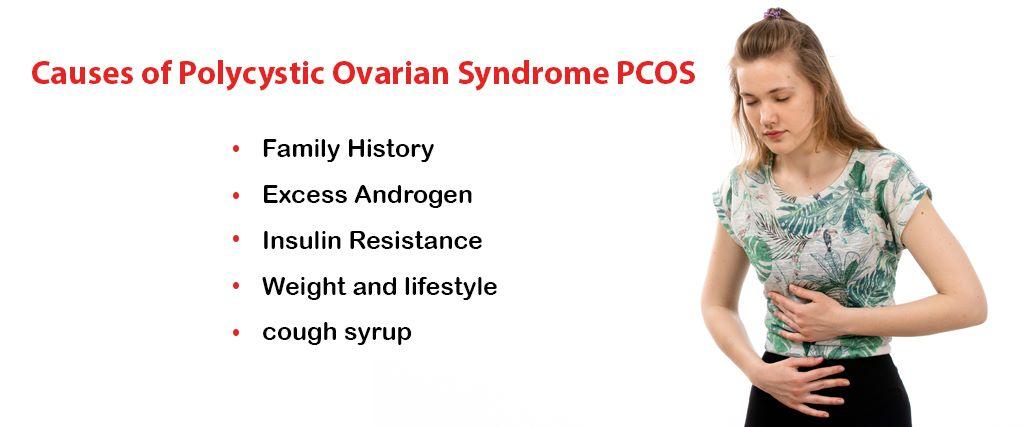
There is no single cause of PCOS. It is believed to involve a combination of genetic, hormonal, metabolic and environmental factors.
1. Family History and Genetics
Women with a family history of PCOS may have a higher likelihood of developing the condition. Researchers believe that several genetic factors may contribute to PCOS.
2. Increased Androgen Levels
Androgens are hormones that are present in both Females and males. Some women with PCOS have higher-than-expected androgen levels.
Increased androgen activity can interfere with normal ovulation and may contribute to:
- Excess facial or body hair
- Acne
- Scalp hair thinning
- Irregular menstrual cycles
- Difficulty conceiving
3. Insulin Resistance
Insulin resistance is common in PCOS. When the body does not respond effectively to insulin, the pancreas may produce more insulin.
Higher insulin levels can contribute to increased androgen production and may interfere with normal ovulation.
4. Weight and Metabolic Health
PCOS can occur in women of different body sizes.
Healthy eating, regular physical activity and appropriate weight management can support overall health and may improve metabolic and reproductive outcomes. Current guidelines recommend healthy lifestyle management for all women with PCOS, without promoting one specific diet or exercise program as universally superior.
5. Lifestyle and Environmental Factors
Lifestyle and environmental factors may influence metabolic health and PCOS symptoms. Stress, sleep, nutrition and physical activity can also affect overall wellbeing.
PCOS Symptoms
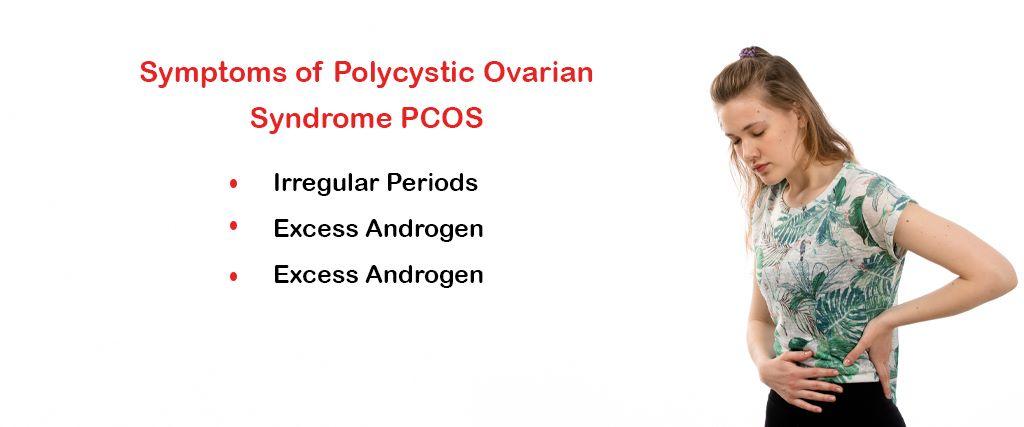
PCOS symptoms can vary considerably from one woman to another. Some women have several symptoms, while others may have only one or two.
Common PCOS symptoms include:
1. Irregular Periods
Irregular or infrequent periods are one of the most common signs of PCOS.
Periods may occur less frequently than expected, become unpredictable or sometimes stop for several months.
2. Irregular or Absent Ovulation
PCOS can interfere with the normal development and release of an egg from the ovary.
Irregular ovulation can make it more difficult to predict the fertile window and may contribute to infertility.
3. Excess Androgen Symptoms
Higher androgen levels or increased androgen activity may cause:
- Facial or body hair growth
- Acne or oily skin
- Scalp hair thinning
- Hair loss in a female-pattern distribution
4. Difficulty Getting Pregnant
Because PCOS can interfere with ovulation, it may make conception more difficult.
PCOS is an important cause of female infertility related to ovulatory dysfunction. However, having PCOS does not mean that pregnancy is impossible.
5. Weight and Metabolic Changes
Some women with PCOS experience weight gain or difficulty managing weight. Insulin resistance and other metabolic factors may also occur.
PCOS and Infertility: Can PCOS Affect Pregnancy?
Yes. PCOS can affect fertility mainly because ovulation may occur irregularly or may not occur at all.
When ovulation is unpredictable, the opportunity for an egg and sperm to meet may be reduced. The good news is that PCOS-related infertility is often treatable.
Depending on the individual situation, fertility treatment may include:
- Lifestyle management
- Ovulation-induction medicines
- Timed intercourse
- IUI (Intrauterine Insemination)
- Injectable gonadotropins
- IVF (In Vitro Fertilisation)
The appropriate treatment depends on factors such as age, duration of infertility, ovulation, ovarian reserve, fallopian tube status and the male partner’s fertility assessment.
How Is PCOS Diagnosed?
There is no single blood test that can diagnose every case of PCOS.
For adults, diagnosis generally involves assessing three major features:
- Ovulatory dysfunction – such as irregular menstrual cycles
- Hyperandrogenism – clinical signs or biochemical evidence of increased androgen levels
- Polycystic ovarian morphology (PCOM) on ultrasound or, in appropriate adult patients, AMH as an alternative marker
Two of these features may support a diagnosis when other possible causes have been excluded.
If a woman has both irregular menstrual cycles and clear evidence of hyperandrogenism, an ovarian ultrasound may not be necessary to establish the diagnosis.
Tests Your Doctor May Recommend
Depending on your symptoms and medical history, your doctor may recommend:
- Medical and menstrual history
- Physical examination
- Hormone testing
- Blood glucose or metabolic assessment
- Lipid profile
- Pregnancy test when appropriate
- Pelvic or transvaginal ultrasound
- AMH assessment in selected adult patients
The exact tests should be determined by a qualified healthcare professional rather than by an online checklist.
PCOS Treatment
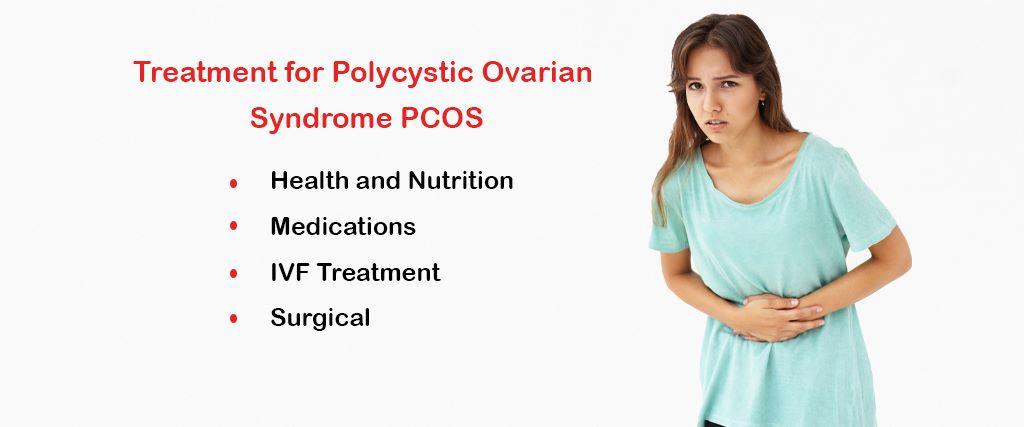
There is no single treatment that is suitable for every woman with PCOS.
PCOS treatment depends on your symptoms and whether your current goal is to regulate periods, manage androgen-related symptoms, improve metabolic health or achieve pregnancy.
1. Healthy Lifestyle and Nutrition
Healthy lifestyle management is an important part of PCOS care.
A balanced diet, regular physical activity, adequate sleep and appropriate weight management can support metabolic and reproductive health.
There is no single “PCOS diet” that works for everyone. A personalised nutrition plan may be more practical and sustainable than following a highly restrictive diet.
2. Medicines for Irregular Periods and Androgen Symptoms
Depending on individual needs, doctors may prescribe hormonal contraceptives to help manage irregular periods and symptoms associated with hyperandrogenism.
They may also help protect the uterine lining in women who have prolonged periods without ovulation. The choice of medicine depends on medical history, contraindications and treatment goals.
3. Metformin
Metformin may be considered, particularly when metabolic features such as insulin resistance are present.
Current PCOS guidance places greater emphasis on its metabolic benefits rather than using metformin as a universal fertility medicine.
4. Treatment to Help Ovulation
For women with PCOS who are trying to conceive and have anovulatory infertility, letrozole is recommended as the first-line pharmacological treatment when there are no other infertility factors requiring a different approach.
Other options may include:
- Clomiphene
- Gonadotropin injections
- Metformin in selected cases
- Other fertility treatments based on individual circumstances
Treatment should always be prescribed and monitored by a fertility specialist.
IUI for PCOS-Related Infertility
IUI (Intrauterine Insemination) may be considered for selected couples with PCOS when ovulation induction is being used, and other fertility factors are suitable.
During IUI treatment, ovulation may be stimulated, and prepared sperm is placed inside the uterus around the time of ovulation.
IUI may not be appropriate for every couple. A fertility specialist will consider factors such as age, sperm quality, fallopian tube status and previous treatment.
IVF Treatment for PCOS
IVF may be considered when other fertility treatments have not resulted in pregnancy or when there is another indication for IVF.
During IVF, ovarian stimulation is used to develop multiple follicles. Eggs are then retrieved and fertilised with sperm in a laboratory. Embryos are subsequently transferred to the uterus.
For women with PCOS, IVF requires careful ovarian stimulation because PCOS can be associated with an increased risk of ovarian hyperstimulation syndrome (OHSS). Modern IVF protocols can be adapted to reduce this risk.
The number of embryos transferred is an important factor in the risk of multiple pregnancy. IVF does not automatically mean twins or triplets, and single embryo transfer can be used when clinically appropriate.
Current international guidance considers IVF a potential option for anovulatory infertility associated with PCOS when other ovulation-induction treatments have failed, unless there is another earlier indication for IVF.
Laparoscopic Ovarian Surgery for PCOS
In selected women with PCOS and infertility, laparoscopic ovarian surgery may be considered when medication-based ovulation induction has not been successful.
This is not a routine treatment for every woman with PCOS. The potential benefits and risks should be discussed with a fertility specialist before choosing this approach.
PCOS and Pregnancy
Many women with PCOS can become pregnant and have healthy pregnancies.
However, PCOS may be associated with an increased risk of certain pregnancy and metabolic complications. Appropriate preconception care and antenatal monitoring can help identify and manage these risks.
If you have PCOS and are planning pregnancy, your doctor may assess:
- Blood pressure
- Blood glucose and metabolic health
- Medications
- Menstrual and ovulation history
- Other infertility factors
A personalised preconception plan can help you prepare for pregnancy.
Possible Complications of Polycystic Ovary Syndrome (PCOS)
PCOS is associated with several long-term health considerations.
Depending on individual risk factors, these may include:
- Infertility or difficulty conceiving
- Insulin resistance
- Type 2 diabetes
- Abnormal cholesterol levels
- Cardiovascular risk factors
- Sleep-disordered breathing or obstructive sleep apnea
- Endometrial hyperplasia and increased endometrial cancer risk
- Anxiety and depression
Not every woman with PCOS will develop these complications. Regular medical assessment can help identify individual risks and support early management.
Polycystic Ovary Syndrome Diet and Lifestyle Tips
If you have PCOS, focus on sustainable healthy habits rather than extreme diets.
Helpful lifestyle habits may include:
- Eat a balanced diet with vegetables, fruits, whole grains, protein and healthy fats.
- Choose minimally processed foods more often.
- Limit excessive intake of sugary drinks and highly processed foods.
- Stay physically active.
- Include both aerobic activity and strength-based exercise when appropriate.
- Maintain a regular sleep schedule.
- Manage stress through healthy coping strategies.
- Follow your doctor’s recommendations for metabolic and reproductive health.
There is no single diet or exercise program that has been shown to be universally superior for all women with PCOS.
When Should You See a Fertility Specialist for PCOS?
Consider consulting a fertility specialist if you have PCOS and:
- Your periods are very irregular or absent.
- You are not ovulating regularly.
- You have been trying to conceive without success.
- Ovulation medicines have not worked.
- You have other known fertility problems.
- You are concerned about your ovarian reserve or reproductive health.
An infertility evaluation should consider both partners, because fertility problems can involve female, male or combined factors.
PCOS Treatment in Srinagar
If you are looking for PCOS treatment in Srinagar, a fertility specialist can assess your menstrual pattern, ovulation, hormone levels, metabolic health and fertility goals.
Imprimis IVF & Fertility Centre, Srinagar provides fertility evaluation and treatment services including infertility assessment, ovulation-related fertility care, IUI and IVF. The centre is located at S R Plaza, Hyderpora Flyover, Hyderpora, Srinagar, Jammu and Kashmir – 190014.
Treatment should be personalised because PCOS affects each woman differently.
Frequently Asked Questions About Polycystic Ovary Syndrome
Can PCOS be cured permanently?
PCOS is generally considered a long-term condition rather than something with a single permanent cure. However, its symptoms and associated health risks can often be effectively managed with lifestyle measures, medicines and appropriate fertility treatment.
Can I get pregnant naturally with Polycystic Ovary Syndrome (PCOS)?
Yes. Many women with PCOS conceive naturally. Irregular ovulation can make conception more difficult, but PCOS does not mean that natural pregnancy is impossible.
Does PCOS always cause infertility?
No. PCOS can cause ovulatory infertility, but not every woman with PCOS has difficulty conceiving.
Is PCOS the same as having polycystic ovaries?
No. Polycystic ovarian morphology on an ultrasound is only one feature that may be considered when diagnosing PCOS. An ultrasound showing multiple follicles does not automatically mean that a woman has PCOS.
Is IVF necessary for PCOS?
Not always. Many women with PCOS can conceive with lifestyle management, ovulation-induction treatment or other fertility treatments. IVF may be considered when other treatments have failed or when there is another medical indication.
Is letrozole used for PCOS fertility treatment?
Yes. Current international guidance recommends letrozole as the first-line pharmacological treatment for ovulation induction in women with PCOS and anovulatory infertility, when there are no other factors requiring an alternative approach.
Can Polycystic Ovary Syndrome (PCOS) cause irregular periods?
Yes. Irregular or infrequent menstrual cycles are one of the common features of PCOS and may occur because ovulation is irregular or absent.
Can women with PCOS have a healthy pregnancy?
Yes. Many women with PCOS have healthy pregnancies. However, some pregnancy and metabolic risks may be higher, so appropriate preconception and antenatal care is important.
Take the Next Step for PCOS and Fertility Care
PCOS can affect periods, hormones, metabolism and fertility, but it does not mean that becoming pregnant is impossible.
If irregular periods or difficulty conceiving is affecting your family-planning goals, a fertility specialist can evaluate the underlying cause and discuss suitable treatment options.
Imprimis IVF & Fertility Centre, Srinagar
Second Floor, S R Plaza, Hyderpora Flyover, Hyderpora, Srinagar, Jammu and Kashmir – 190014
Phone: +91 7678556881 | +91 9650777084 | +91 9797756111
Email: info@imprimisivf.com
Book a fertility consultation to discuss PCOS, ovulation problems and available fertility treatment options.
Medical Information & Editorial Details
Medical Reviewer: Imprimis IVF & Fertility Centre Team
Last Updated: September 19, 2026
Clinic: Imprimis IVF & Fertility Centre, Srinagar
Medical Disclaimer: This article is intended for general educational purposes and should not replace individual medical advice, diagnosis or treatment. PCOS symptoms and treatment needs vary between individuals. Consult a qualified gynaecologist or fertility specialist for personalised evaluation and treatment.
References: International Evidence-Based Guideline for the Assessment and Management of Polycystic Ovary Syndrome, 2023; American Society for Reproductive Medicine (ASRM) recommendations.